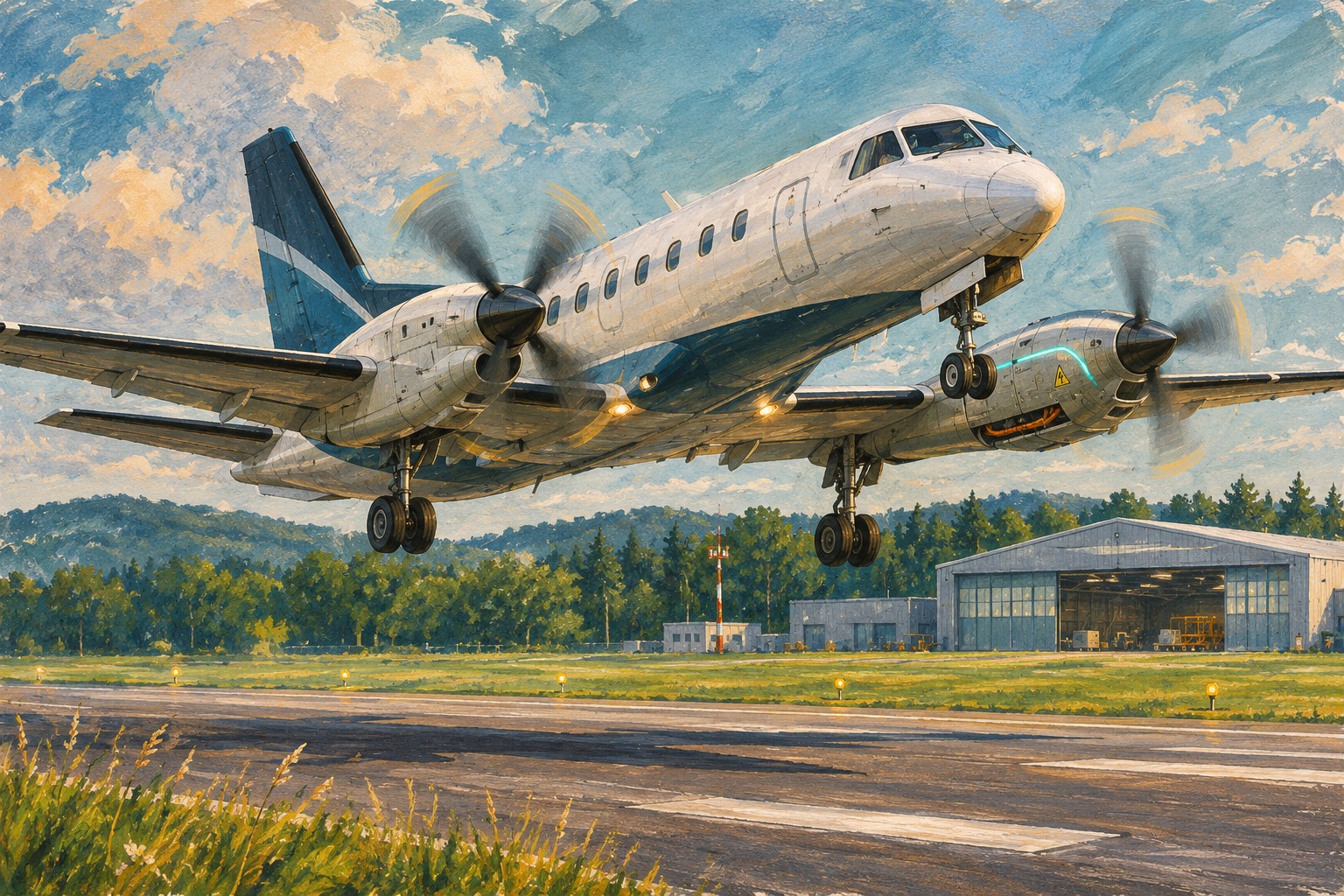
A modified Saab 340B has completed what GE Aerospace and BETA Technologies describe as the first hybrid-electric-assisted takeoff by an aircraft designed to fly at commercial-airliner altitudes with passengers. Electric motors did not replace the gas turbine. They gave it extra power during the most demanding phase of flight.
The test aircraft used a conventional GE CT7 engine on one side and a modified hybrid-electric engine on the other. Batteries and electric motors supplied additional thrust during takeoff through a megawatt-class, high-voltage system.
GE says early observations showed less noise than gas engines alone. That is encouraging, but it is not yet an airline product, a certification result or evidence that a passenger can book a hybrid-electric flight.
Why takeoff is the hard moment
Aircraft need high power to accelerate, lift and climb safely. A hybrid system can provide a temporary electrical boost while allowing the gas turbine to do less of the peak work. In theory, that could help designers improve efficiency, noise and engine operation across a flight.
Earlier GE and BETA tests used electrical assistance during climb and cruise, as well as regeneration during descent. In May, the companies worked with NASA and Boeing on a hybrid-electric flight above 30,000 feet. The new milestone adds takeoff to the list of demonstrated phases.
The physics still imposes a tough constraint. Batteries carry far less usable energy per kilogram than aviation fuel, and every kilogram matters in an aircraft. That is why near-term hybrid concepts combine electrical equipment with a turbine rather than attempting to replace fuel entirely on larger commercial routes.
What the test does — and does not — prove
The flight shows that the integrated system can contribute power in a real aircraft during takeoff. Engineers can now study thermal behaviour, controls, vibration, safety margins and how the components interact.
It does not prove commercial reliability across thousands of flights, nor does it settle maintenance cost, battery life or certification. Aviation regulators will require extensive evidence before passengers rely on such a system. GE is developing the technology through the CFM RISE demonstration programme, alongside other ideas such as open-fan engines.
For Malaysia, the immediate impact is indirect. Airlines here are not announcing hybrid Saab services based on this test. The relevance is longer term: a technology that reduces fuel burn or airport noise could influence future fleets, operating costs and engineering skills, but only after certification and airline adoption.
The test is best read as a credible engineering step. Electric assistance has moved from a laboratory component to a takeoff demonstration. The much harder journey — proving that it is safe, economical and maintainable at airline scale — is still on the runway.
Sources & further reading
Prepared with AI assistance from linked reporting. The cover is an AI-generated editorial illustration. Spotted something we should correct?