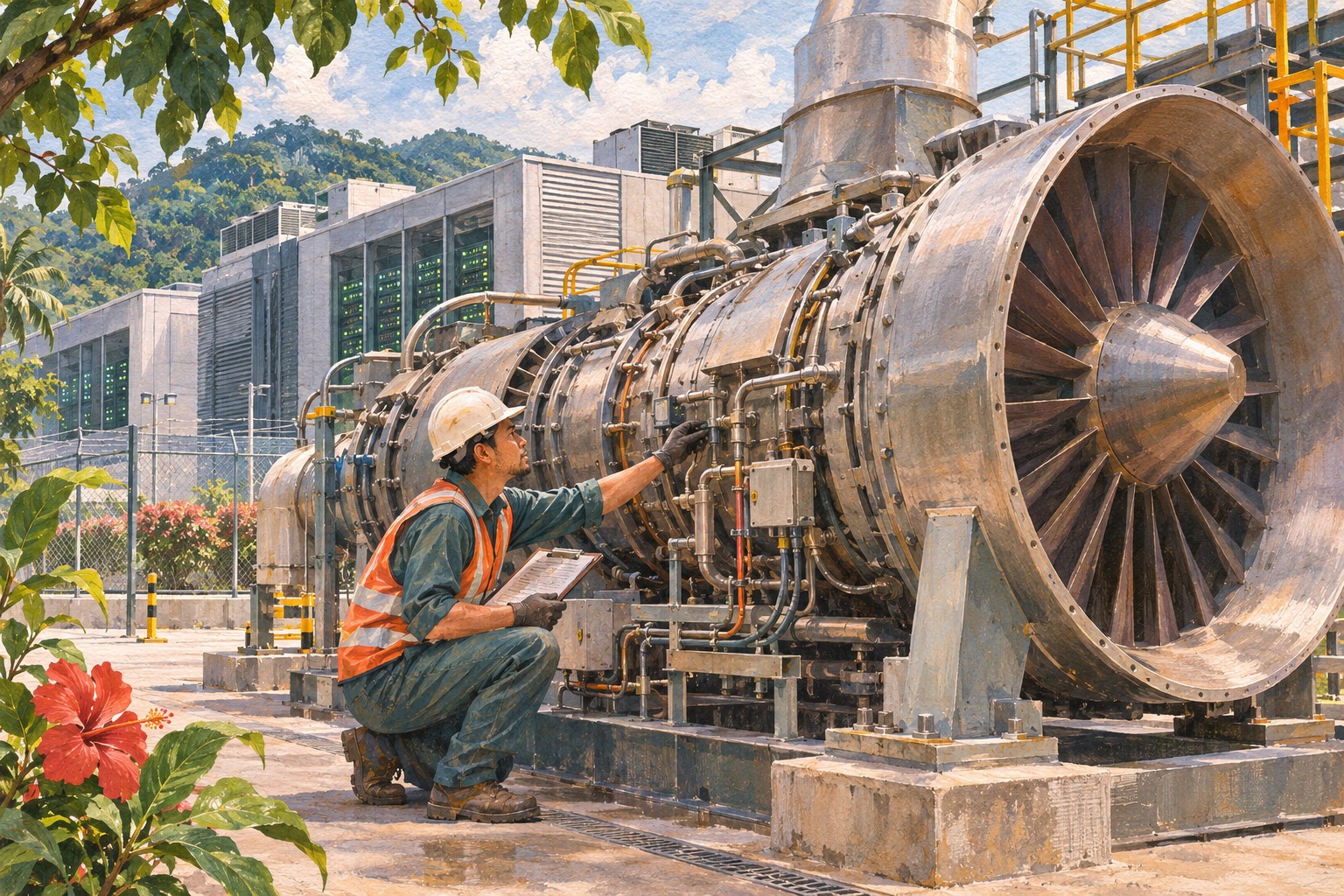
The race to power artificial-intelligence data centres is creating an unusual second-hand market: operators are searching for used industrial gas turbines and converted jet engines because new equipment can take years to arrive. Reuters reported on 9 November that the shortage is drawing machinery designed for aviation or shorter operating cycles into plans for round-the-clock electricity.
Aeroderivative turbines are built from aviation-engine technology. They can start quickly, occupy less space than some large power plants and provide dependable output when a grid connection is delayed. A used unit may also be available sooner than a new heavy-duty turbine.
The trade-off sits in the duty cycle. A machine that performed well in an aircraft or for peak demand is not automatically ready to run near-continuously beside servers. Buyers need verified service histories, inspection of hot-section components, parts availability and a maintenance contract that reflects the new workload. Efficiency matters because every extra unit of gas raises fuel cost and emissions.
For Malaysia, the story is relevant as data-centre investment accelerates. A developer proposing on-site generation should disclose the fuel source, expected operating hours, air-emission controls, noise plan and whether the turbine is temporary backup or a long-term substitute for grid power. The answer changes the project's environmental footprint.
Fast deployment can solve a schedule problem while creating a public-cost problem if grid upgrades, gas supply or pollution controls arrive later. Regulators should evaluate an entire energy plan: new renewable generation, storage, demand management, grid connection and backup. A turbine may be part of resilience, but it should not let an AI campus describe fossil generation as invisible infrastructure.
The useful questions are concrete: how old is the equipment, who certifies it, how many hours will it run, what is its heat rate, what happens during overhaul and what cleaner capacity is added alongside it? In a market moving this quickly, the cheapest machine to acquire may be the most expensive one to operate.
Sources & further reading
Prepared with AI assistance from linked reporting. The cover is an AI-generated editorial illustration. Spotted something we should correct?