Anthony Loke resigned as Malaysia’s Transport Minister on Tuesday evening, 10 November, turning a court decision about former prime minister Najib Razak into an immediate Cabinet change. The DAP secretary-general said the resignation took effect at once, after the Kuala Lumpur High Court ordered that Najib serve the remainder of his SRC International sentence under house arrest.
The announcement matters beyond the political drama. The Transport Ministry sits over the agencies and policies that shape daily commutes, rail projects, airports, ports, commercial vehicles and road safety. Those operations do not stop when a minister leaves, but major decisions, public explanations and negotiations now need a new political lead.
The decision Loke had already signalled
Loke’s move was not a surprise resignation drafted after Tuesday’s judgment. In September, he handed a resignation letter to Prime Minister Anwar Ibrahim and said his position would take effect if Najib returned home under house arrest. He repeated that stand last week as the transfer appeared imminent, framing it as a question of consistency with his stated position on corruption and equality before the law.
When the High Court issued a new order on 10 November, Loke followed through. In his statement, carried by Bernama and other Malaysian news organisations, he said the decision was consistent with the principles and position he had previously made clear. He thanked Anwar for the opportunity to serve in Cabinet from December 2022 and thanked the Transport Ministry’s senior management and staff for their cooperation.
That sequence explains why the timing was so precise. The resignation was tied to the implementation of Najib’s house arrest, not to a transport-policy dispute or a sudden collapse in relations inside the ministry. It also means the political argument surrounding Najib now has a practical administrative consequence: Malaysia needs someone to take responsibility for one of the busiest federal portfolios.
What happens inside the ministry
The civil service and transport agencies continue operating under existing laws, budgets and approved programmes. Trains keep running, flights remain regulated, vehicle and licensing services continue, and ongoing procurement does not automatically disappear. Day-to-day administration belongs to the ministry’s secretary-general, departmental heads and agency management.
The missing layer is ministerial authority. Cabinet may assign another minister to act temporarily, or the prime minister may appoint a permanent successor. Until Putrajaya announces that arrangement, officials and industry players will be watching for who answers in Parliament, who signs off on policy choices and who becomes the public face of unresolved transport issues.
That matters because transport is rarely a single-project portfolio. It touches the Road Transport Department, Land Public Transport Agency, Civil Aviation Authority of Malaysia, port authorities and rail operators, among others. A new minister must quickly absorb files ranging from service reliability and enforcement to infrastructure financing and international transport agreements.
For commuters, the useful distinction is between continuity and direction. Existing services and projects continue through their agencies; what may slow are decisions requiring fresh ministerial approval, a change of policy or negotiation across ministries. Any real delay will depend on how quickly the government names an acting or permanent replacement and how much discretion officials already have.
A transport record suddenly cut short
Loke returned to the Transport Ministry in December 2022, having previously held the same portfolio from 2018 to 2020. His second stint covered a period of renewed attention to public-transport reliability, aviation recovery, road enforcement and large rail investments. It also made him one of the government’s most visible ministers because transport problems are experienced directly: a delayed train, a congested road, a licensing queue or an expensive flight needs an answer people can understand.
The resignation therefore removes not only a Cabinet member but a familiar spokesperson. A successor will inherit the political expectation that the ministry explain operational problems quickly and show measurable improvements, while also managing less visible work involving safety rules, freight, shipping and bilateral arrangements.
The government has not yet announced who will take over. The next useful update for the public is not speculation about names but a formal assignment from the Prime Minister’s Office, followed by a clear statement on whether current transport priorities, project timelines and parliamentary commitments remain unchanged.
Why the trigger is politically significant
Loke’s resignation followed a High Court order that allowed Najib to serve the remainder of his SRC International sentence at his Langgak Duta residence until 23 August 2028. The ruling ended the immediate legal and administrative uncertainty that had delayed the transfer after a RM50 million fine was paid on 6 November.
By linking his office to that outcome, Loke has made his personal position part of the government’s broader political balance. DAP is a major component of Anwar’s coalition, while Umno is also central to the administration. Najib remains an influential figure among parts of Umno’s base. The prime minister must now manage both the transport vacancy and the coalition reaction without allowing essential government work to drift.
Loke remains DAP secretary-general unless the party announces otherwise. His departure from Cabinet does not remove him from party politics, and it may give him more freedom to speak from outside the executive. That will shape how the resignation is read in the coming days: as a principled exit, a coalition pressure point, or both.
The practical questions to watch
Three announcements will tell Malaysians how disruptive this change becomes. First is the name of the acting or new transport minister. Second is whether Cabinet keeps current project and policy timetables. Third is who will answer urgent operational questions from Parliament, transport operators and the public.
For passengers and motorists, official notices from the Transport Ministry and its agencies remain the reliable source for service changes. A minister’s resignation does not itself alter train schedules, licence validity, airport rules or road regulations. Those require separate official decisions.
The politics will dominate the headlines, but the test of the transition is more ordinary: whether a ministry that affects millions of daily journeys can keep making decisions, explain them clearly and hand its large portfolio to a new leader without losing momentum.
Sources & further reading
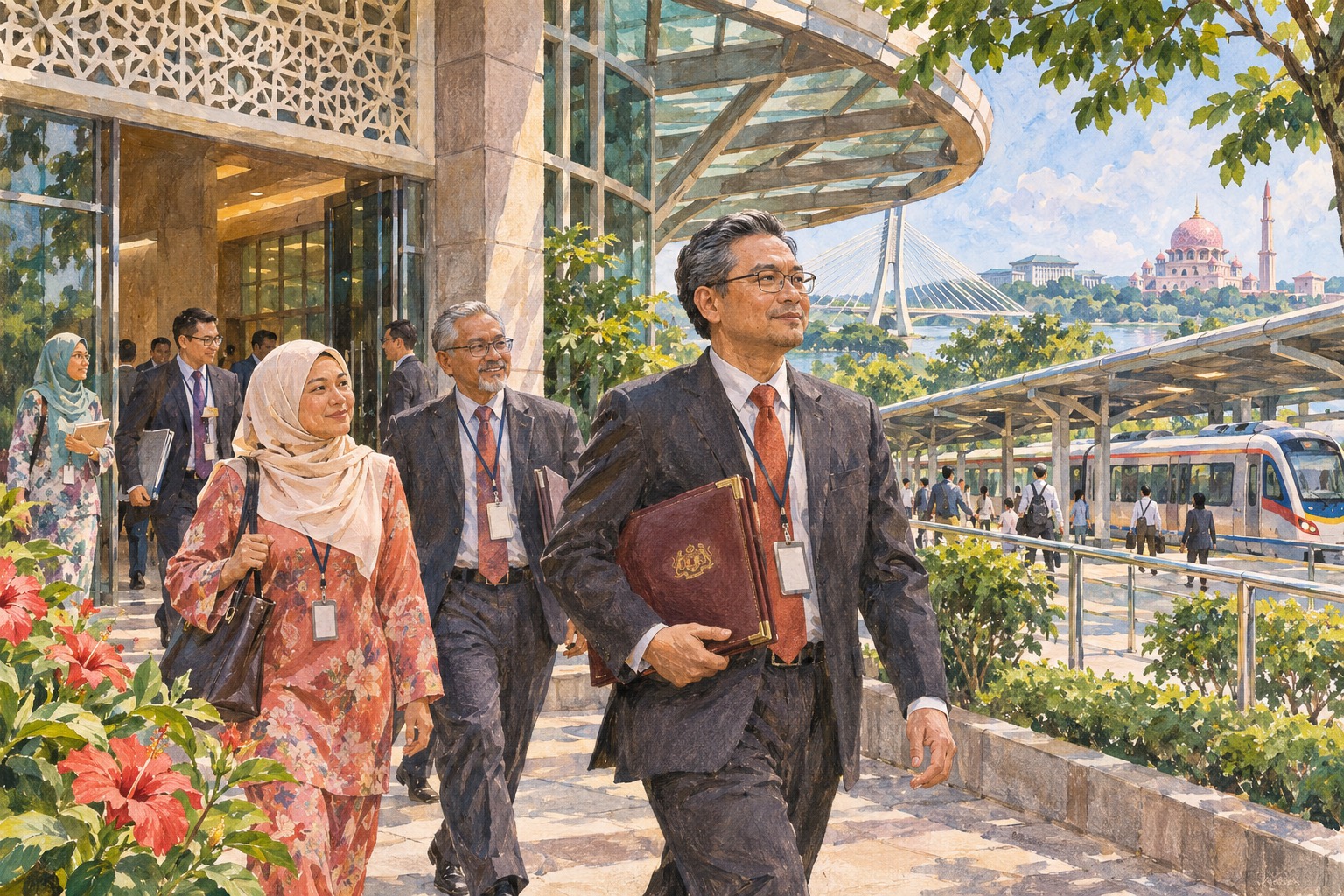
Prepared with AI assistance from linked reporting. The cover is an AI-generated editorial illustration. Spotted something we should correct?