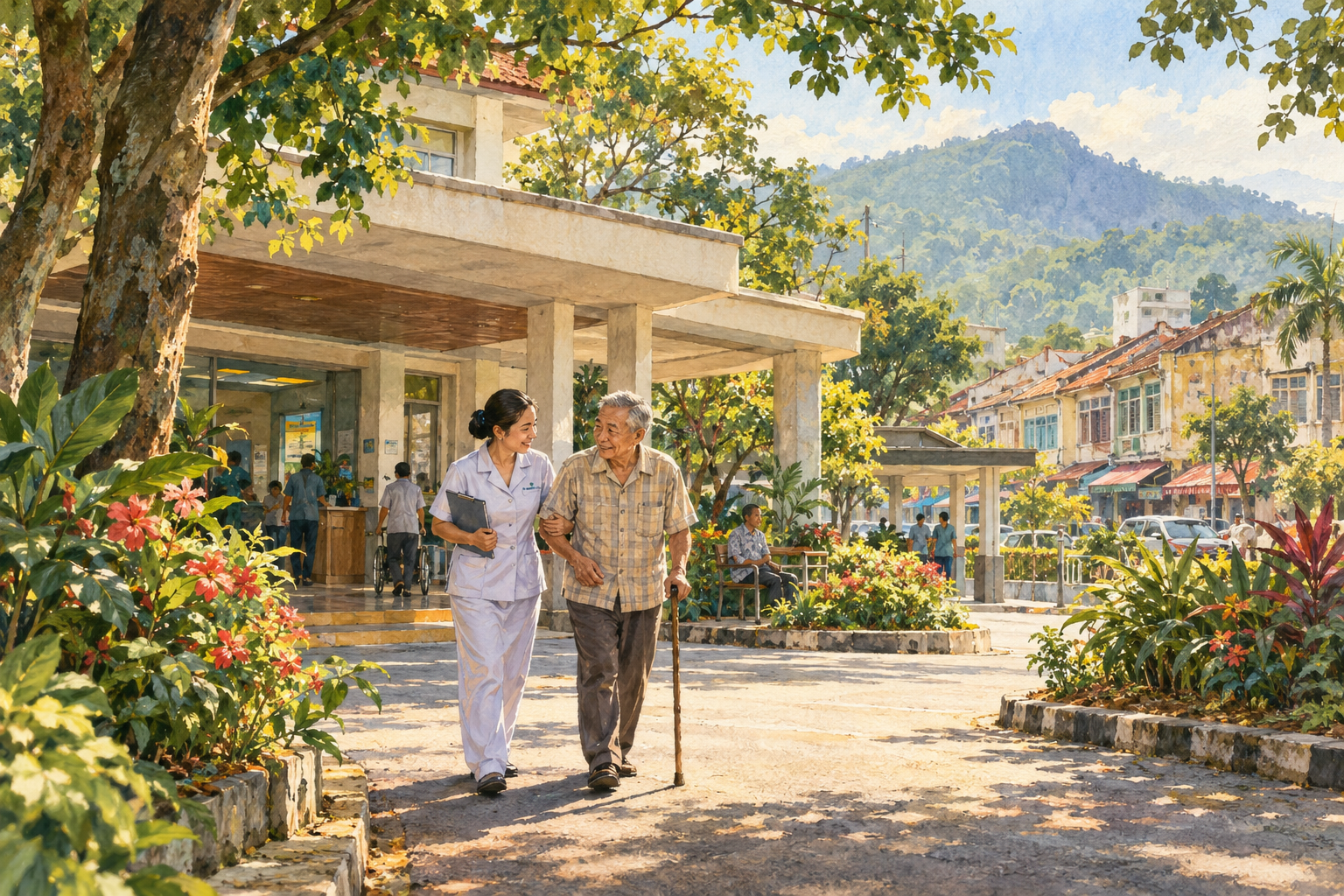
On 1 October 1890, Hospital Bukit Mertajam opened with 52 beds and four wards. One hundred and thirty-six years later, the same institution is still caring for its town, now as a 242-bed minor specialist hospital. Its anniversary celebration on 2 October was a birthday party with a serious question underneath: how does a century-old hospital keep making room for today's patients?
At a charity gala marking the anniversary, Bukit Mertajam MP Steven Sim said the hospital needs continuing upgrades as patient needs change, particularly with more chronic illness. He argued that this should happen without moving it from its original site. Bernama reports that he pledged to work with the Health Ministry and Penang state government on expansion, modern equipment and the acquisition of adjoining land.
The numbers show why this is more than a heritage plaque. Bernama says the hospital handles hundreds of thousands of patients each year. Those are people arriving for appointments, treatment and follow-up care, together with families and staff who know the roads around the building. Relocation might create a newer facility, but keeping care on a familiar site has its own value for a town that has grown around it. That is a local consideration, not proof that every proposed expansion has already been funded.
Sim also pointed to the hospital's role during the COVID-19 pandemic. For residents, that recent memory sits alongside the much longer story of a public institution that has had to adapt across generations. A place founded when Bukit Mertajam looked very different now faces demands its first four wards could not have imagined.
The next part of this story is practical rather than ceremonial: which upgrades proceed, when neighbouring land is secured, and how treatment continues while work is done. The gala celebrated 136 years of service. Patients and staff will feel the value of that history most clearly if it helps the hospital serve the next generation from the heart of Bukit Mertajam.
Sources & further reading
Prepared with AI assistance from linked reporting. The cover is an AI-generated editorial illustration. Spotted something we should correct?