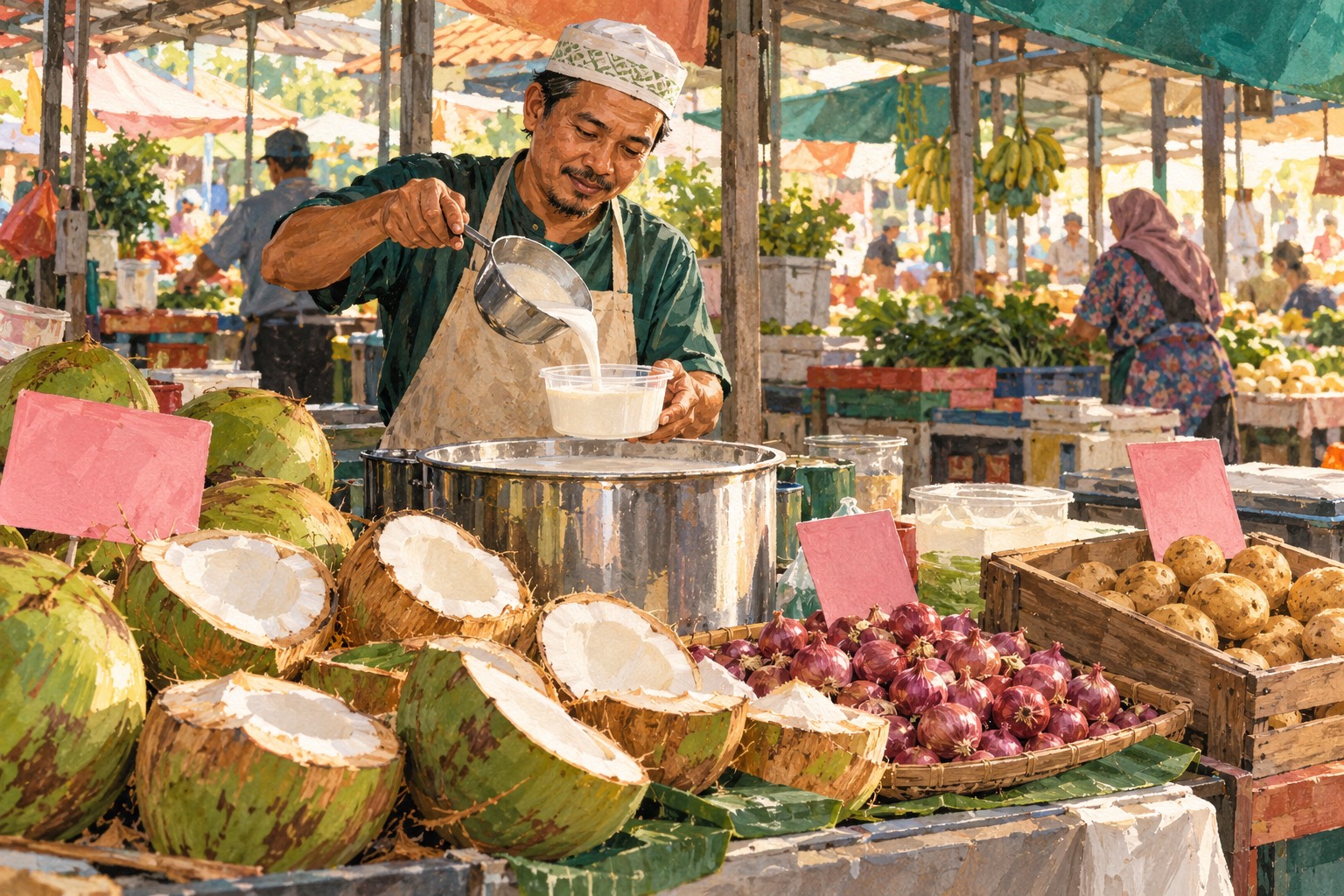
Coconut milk and potatoes from China are joining Malaysia’s Deepavali price-control list this year. But the new seven-day scheme starts on 4 November, so shoppers should check the dates before treating a price seen this weekend as a breach of that festive ceiling.
The announcement, covered in fresh reports on 30 October following the minister’s Thursday press conference, puts 11 types of goods under the Deepavali Festive Season Maximum Price Scheme. Last year’s list had nine.
For households planning a festive menu, the useful question is quite specific: does the item in your basket match the controlled description, during the controlled period, in the place where you are buying it?
Put these seven days on the shopping list
The announced window runs from 4 to 10 November. It covers four days before Deepavali, the celebration itself on 8 November, and two days afterwards.
That matters if you are splitting shopping across several trips. The scheme’s dates are not the whole festive shopping season, and an announcement made in October does not make its November controls effective immediately.
Keep the window attached when forwarding the information to relatives. A cropped list of goods without a year and dates is less useful than the original notice, particularly when last year’s pamphlets remain easy to find online.
The scheme sets maximum prices for specified goods. It is not a promise that every ingredient in a festive meal will become cheaper by the same amount, or that a whole supermarket bill will fall.
Eleven descriptions, rather than eleven broad aisles
The list reported by Astro Awani includes large red onions, small Indian onions and Indian rose shallots as separate entries. Red chillies, tomatoes and Australian dhal are also covered.
The remaining entries are imported bone-in mutton, whole coconuts, grated coconut, coconut milk and potatoes from China. Coconut milk and the specified potatoes are the additions this year.
Those descriptions deserve attention. An imported bone-in product is not automatically interchangeable with every meat cut on a counter. Potatoes described by origin should not be treated as a blanket description of every potato variety or supply source.
The same care applies to the different onion entries. When checking a shelf label, make sure you are comparing the item being sold with the correct entry rather than choosing the lowest number from a different row.
For anyone writing a shopping list for someone else, include the description as well as the quantity. A relative sent to buy “onions” should not have to guess which listed product you meant or whether a substitute meets the same description.
A ceiling is different from a discount
Domestic Trade and Cost of Living Minister Armizan Mohd Ali said most listed maximum prices were stable or lower compared with last year, according to The Star’s 30 October report.
It reported lower maximum prices for five listed items in Peninsular Malaysia, including whole and grated coconut, large red onions, Indian shallots and Australian dhal. Imported bone-in mutton was the item reported to have higher wholesale and retail ceilings across the regions.
These are comparisons between maximum permitted prices. They do not establish what every trader was charging last week. A shop already selling below a ceiling presents a different comparison from a shop selling at it.
That is why it is useful to check actual prices as well as the official limit. A maximum tells you the upper bound applicable to the specified transaction. It does not tell you that every offer below it is equally good value for your needs.
Location and level of sale matter
The reporting distinguishes Peninsular Malaysia, Sabah, Sarawak and Labuan. Do not assume that a figure in a social-media graphic applies everywhere just because the item name looks familiar.
Check the current official schedule for the relevant location, unit and level of sale. A wholesale entry cannot simply be substituted for a retail entry when judging a purchase from a shop.
KPDN’s published 2025 pamphlet illustrates this problem clearly: it separated wholesale and retail columns and gave certain coconut products different control levels. That document is useful historical context for reading a schedule, but its dates and numbers must not be used as the 2026 price list.
This article does not reproduce a numeric ceiling table because the exact current schedule and applicable units should be checked together. A price without its unit or relevant column can create a misleading comparison even when the number itself was copied correctly.
Look for the pink price tags
Astro Awani reported that traders must display pink price tags for controlled goods. It also reported planned enforcement at public markets, farmers’ markets and shopping centres under the Price Control and Anti-Profiteering Act 2011.
For a shopper, a visible tag is a prompt to check the description and selling price. If something is unclear, ask which item and unit the label refers to before paying. Keep the question focused on the actual product rather than accusing a trader on the strength of an incomplete graphic.
The Star’s current report lists KPDN’s complaint channels, including WhatsApp at 019-848 8000, the hotline at 1-800-886-800 and the Ez Adu KPDN application.
If you believe there is a breach, retain the receipt and the product, price, date and premises details so you can explain the transaction. That is a practical record to prepare, not a guarantee that any particular complaint will be upheld. The relevant facts and applicable rules still need checking.
A RAHMAH sale is a separate thing to check
RTM also reported a Deepavali Jualan RAHMAH MADANI programme. It directed readers to the official programme portal or Info Jualan RAHMAH MADANI application for schedules.
An event listing and a legal maximum-price scheme serve different purposes. Check a sale’s location and timing before travelling, and compare the goods you actually need. A saving on one item can disappear if the trip costs more or the purchase is unnecessary.
For the coming week, keep the official dates and full item descriptions together. That gives the person doing the shopping something usable at the counter, rather than a general promise that everything for Deepavali has become cheaper.
Sources & further reading
Prepared with AI assistance from linked reporting. The cover is an AI-generated editorial illustration. Spotted something we should correct?