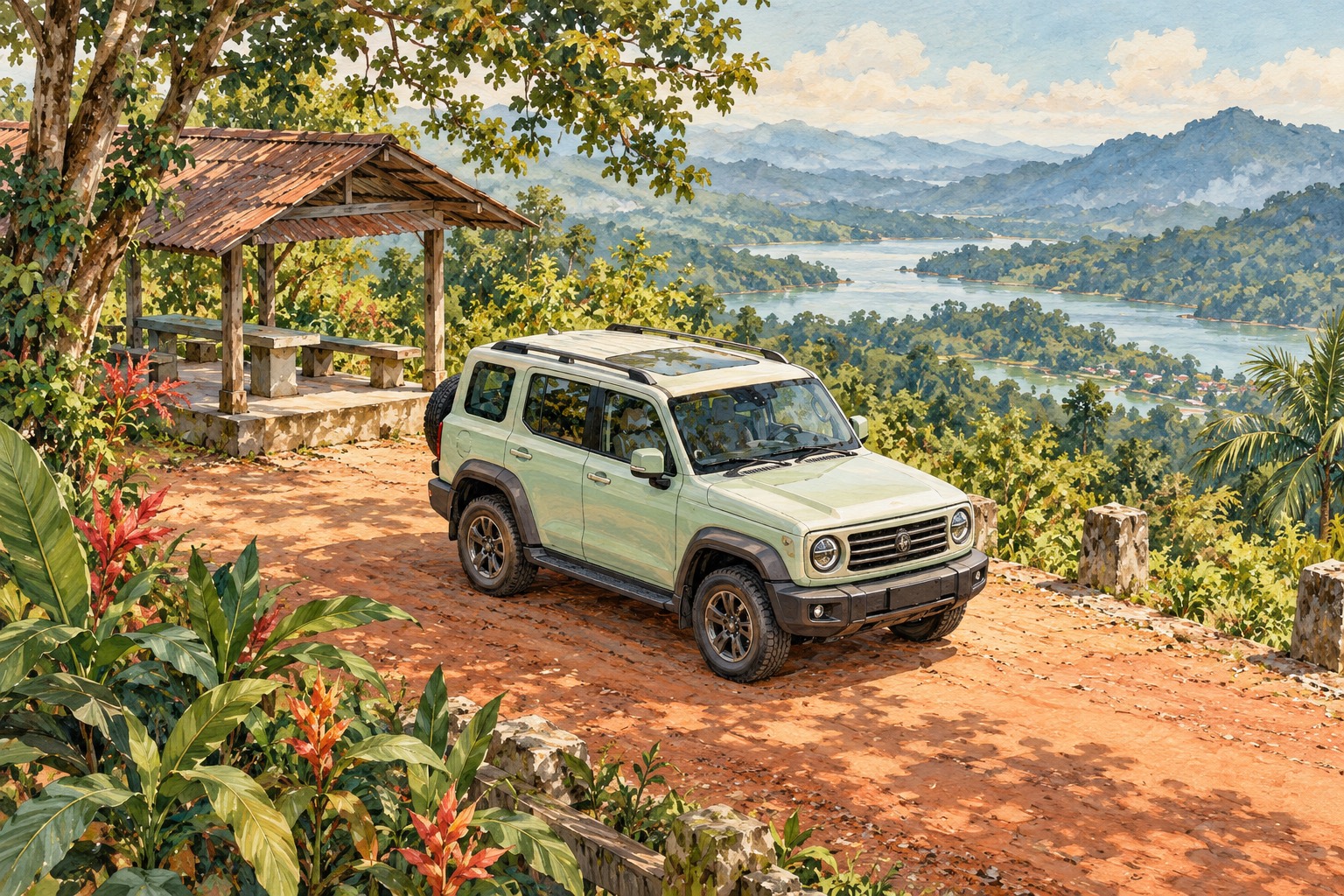
iCaur’s new V25 looks determined to keep the boxy SUV alive. Underneath that upright body, buyers in the model’s announced range will have two different approaches to electric driving: a battery-electric version and a range-extender.
The vehicle has been shown at the brand’s international user summit in Wuhu, China. Reporting on 21 October places it between the smaller V23 and the larger V27, completing the V-Series family.
The petrol engine has a particular job
CAR Magazine reports that the range-extender uses a turbocharged 1.5-litre four-cylinder engine as an onboard generator. The battery-electric alternative relies on externally supplied electricity without that petrol generator.
That difference matters more to everyday ownership than the shared styling. Anyone comparing the versions needs to know how they will charge, when petrol might be used and which specification is actually offered in their market.
The reported dual-motor all-wheel-drive setup produces 335 kW and 505 Nm. These are announced specifications, not measurements from a Sorakumy road test.
Practicality is part of the pitch
The V25 retains round headlights, an upright windscreen and a spare wheel at the rear. CAR Magazine also describes a side-opening tailgate, multiple storage spaces and front seats that can fold into a resting arrangement with the rear seats.
For a buyer, those details raise practical questions worth trying in person: whether the tailgate has enough clearance where the vehicle is normally parked, and whether the seat arrangement suits the people using it.
Malaysian readers should wait for local pricing and a confirmed market specification before treating global features as a local equipment list. The latest reports establish what iCaur is presenting internationally, not a Malaysian delivery promise.
The V25’s appeal may begin with its squared-off silhouette. Choosing between its versions starts with a less glamorous question: where will its energy come from on an ordinary week?
Sources & further reading
Prepared with AI assistance from linked reporting. The cover is an AI-generated editorial illustration. Spotted something we should correct?