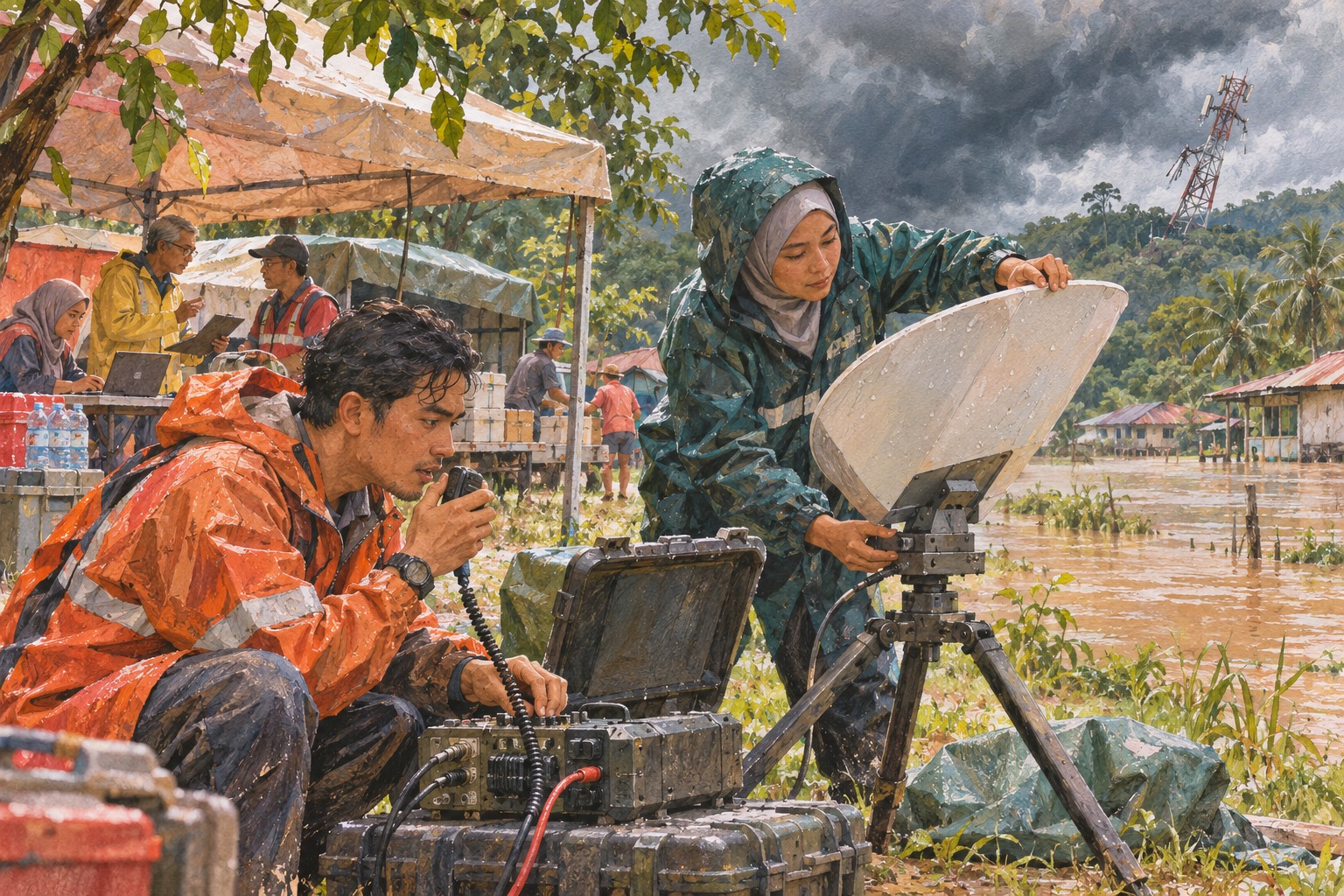
Malaysia is examining how satellite connectivity, artificial intelligence and integrated ground-and-space networks could keep essential communications running during disasters. The attraction is obvious: floods can damage towers, cut electricity and isolate precisely the places that most need rescue coordination.
Communications Minister Datuk Fahmi Fadzil said at Mobile World Congress Doha that these technologies could complement conventional infrastructure in remote and disaster-affected areas. The Malaysian Communications and Multimedia Commission has also developed MCMC PRIME, a mobile radio and internet system intended to support communications when normal networks are disrupted.
What a backup network can do
An emergency link can connect responders, carry situation reports and restore access to official instructions. It may help a relief centre communicate when nearby mobile service is down. Integrating terrestrial and non-terrestrial networks could let traffic move through a different path when one part fails.
But satellite service still needs equipment, power, trained operators and a usable view of the sky. Heavy weather, damaged terminals, congestion and limited capacity can affect performance. It is not a promise that every stranded phone immediately gains full broadband.
The useful goal is resilience: several communications layers, tested before a flood, with clear priorities for emergency calls and public warnings. MCMC, telcos, NADMA and local responders need to know who deploys equipment, who powers it and how information is verified.
AI needs a defined job
Artificial intelligence can help sort reports, identify network outages or analyse patterns, but it should not become a vague label attached to every emergency system. A model can be wrong, and a polished answer is not a substitute for a confirmed evacuation order.
Authorities should state what data an AI system uses, who reviews its output and how mistakes are corrected. Public-facing messages should remain traceable to a responsible agency. During a disaster, one false location or invented shelter can be dangerous.
What readers should do
A stronger national backup does not remove household preparation. Keep emergency numbers and meeting points on paper, charge a bank power unit, save official alerts, and agree how family members will communicate if mobile data becomes unreliable. Text may get through when video will not.
For now, satellite-AI integration is a direction Malaysia is exploring, while MCMC PRIME is the concrete system officials say is available for disrupted networks. The measure of success will not be a technology demonstration. It will be whether responders and affected communities can exchange accurate information when the ordinary network is at its weakest.
Sources & further reading
Prepared with AI assistance from linked reporting. The cover is an AI-generated editorial illustration. Spotted something we should correct?