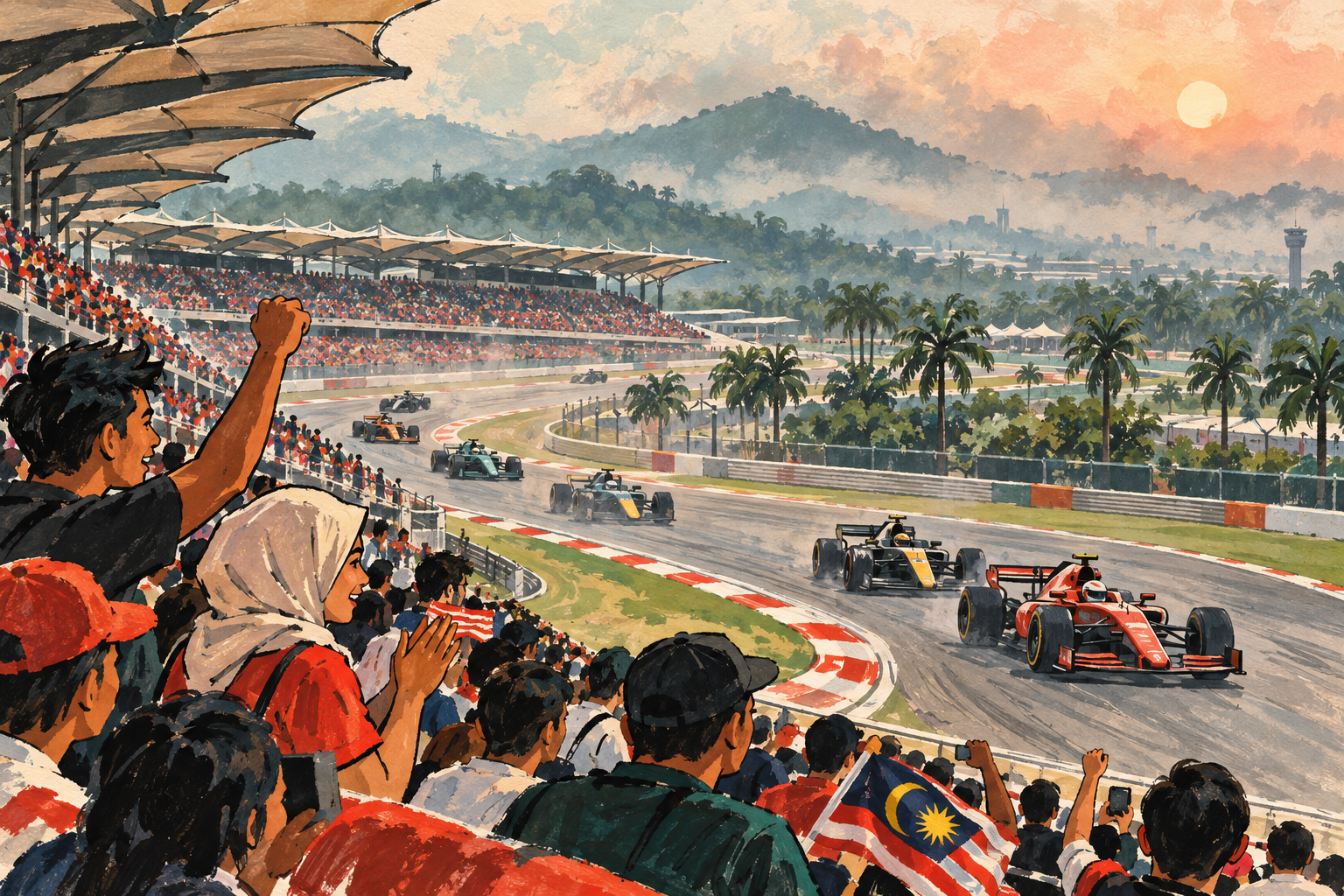
A grand prix called Bahrain is about to happen in Malaysia. That strange sentence is the first hook of this weekend's Formula 1 race at Sepang, but the second is more immediate: the circuit says nearly 100,000 tickets have sold, while haze has put air quality on the organisers' list of things to watch.
Sepang International Circuit chief executive Azhan Shafriman Hanif told reporters on 30 September that the venue was fully prepared for the 2–4 October event. Around 3,000 grandstand and hillstand tickets remained, he said. The near-100,000 figure would be a ticket-sales record for races at the circuit, according to his account. It is a big crowd for a race assembled on a compressed timetable.
The Bahrain GP was originally cancelled amid geopolitical tensions in West Asia. An agreement between Formula 1, the FIA and the Malaysian and Bahrain governments kept the event on the 2026 calendar by placing it at Sepang. Malaysia last hosted its own Formula 1 grand prix in 2017, after a run that began in 1999. For fans, the unexpected detour brings top-level racing back to a familiar track; for everyone responsible for the venue, it has meant doing months of work in weeks.
A circuit ready on paper, a sky nobody controls
Azhan said Sepang had less than two months to prepare where a normal lead time would be six or seven months. He reported that almost all logistics cargo had arrived before paddock activation and called the circuit 100% ready. That statement covers the venue's operational preparations. It does not guarantee the weather or air quality on race day.
SIC is working with the National Disaster Management Agency and MetMalaysia on monitoring. Azhan said cloud seeding had taken place around the circuit in an effort to bring rain and clear the air. He also said there is an Air Pollutant Index threshold at which a race could be cancelled or postponed. He did not give Bernama a specific numerical threshold, so it would be misleading to turn one reading into a prediction of whether the race will proceed.
The air-quality concern is real rather than a remote contingency. On 1 October, Bernama reported eight monitoring areas in the unhealthy API band, including several in Selangor, Negeri Sembilan, Kuala Lumpur and Putrajaya. The figures are a snapshot from that morning, not a forecast for Sepang. Air readings can change with wind, rain and local conditions, and the race authorities will use their own operational assessments. Still, anyone travelling to the circuit should follow current official air-quality information rather than assuming the situation will match yesterday's view from their window.
The haze adds a human dimension to what might otherwise be only a motorsport story. A successful race needs drivers who can see, crews who can work safely and spectators who can spend hours outdoors. The decision-makers face a balance between the excitement of a full venue and the duty to respond to conditions on the ground. Cloud seeding is one measure in the organisers' preparations; it is not a promise of clear skies.
Why the weekend reaches beyond the grandstand
Accommodation interest suggests that the surprise race is bringing visitors beyond existing Malaysian F1 fans. Airbnb said searches for Kuala Lumpur, Sepang and surrounding areas for the 2–4 October weekend were up more than 160% year on year. That is a company measure of search interest, not a count of booked rooms or tourists who have arrived. It should be read as an indicator of intent rather than a completed economic windfall.
The same platform said roughly three-quarters of those searches came from international travellers in markets including Singapore, China, Indonesia, Australia, Britain and the United States. Kuala Lumpur accounted for more than 60% of area searches, while Sepang was close to a quarter. That makes practical sense: many visitors may choose the city's hotel and dining options, then travel to the circuit. Airbnb also said about 80% of searches extended beyond race weekend, with a median intended stay close to six nights.
For local businesses, those patterns could mean spending across more than one district. But searches are not sales; actual visitor numbers, transport demand and business receipts will only become clear after the event. The same caution applies to the ticket figure. It is an impressive signal of demand, but a sold ticket is not the same thing as a person turning up if conditions change.
What fans should watch next
The most useful updates over the next two days are not rumours about whether F1 will race in haze. They are official notices from the circuit, race organisers and air-quality authorities. A traveller should check current transport and entry guidance as well as the latest API readings. Anyone with health concerns should use public-health advice appropriate to their situation, especially if they expect to be outdoors for long stretches.
This weekend could become a memorable return of F1 to Sepang: a Bahrain race on a Malaysian circuit, assembled at speed and met by an unusually large audience. The honest story, though, has two endings still open. One is whether the race delivers the spectacle fans bought tickets for. The other is whether the air lets everyone enjoy it safely. Those answers will come from conditions at Sepang, not from the headline ticket count.
Sources: [Bernama on circuit preparations](https://www.bernama.com/en/general/news.php?id=2613967), [Bernama on travel searches](https://www.bernama.com/en/general/news.php?id=2613966), [Bernama on air-quality readings](https://web26.bernama.com/en/region/news.php?id=2614022).
Sources & further reading
Prepared with AI assistance from linked reporting. The cover is an AI-generated editorial illustration. Spotted something we should correct?