Malaysia approved RM350.4 billion worth of investment in the first nine months of 2026, but the more useful number for most people is 152,090. That is how many jobs the 4,387 approved projects are expected to create when they are fully implemented.
The Malaysian Investment Development Authority’s 17 November report shows approvals rising 20.7% from RM290.3 billion in the same period last year. Foreign investment made up RM212.3 billion, while domestic investment contributed RM138.1 billion. Services remained the largest sector at RM219.1 billion, followed by manufacturing at RM106.3 billion and the primary sector at RM25 billion.
Those totals describe a pipeline rather than one giant cheque arriving this week. MIDA says manufacturing projects typically need 18 to 24 months to move through regulatory steps, construction and machinery installation. The practical question is which projects proceed, where they land and how much work reaches Malaysian employees and suppliers.
The digital concentration is huge
Data-centre and cloud-computing projects accounted for RM123.5 billion across 86 approvals — 35.2% of all approved investment. That was 44.5% higher than a year earlier. Information and communications led the services sector with RM133.5 billion.
This concentration creates demand for construction, electrical systems, cooling, network equipment, security, maintenance and energy. It also creates pressure on power, water and land, which is why Johor has introduced screening for proposed facilities and the federal Data Centre Task Force applies conditions including at least 30% local content for new data centres.
For Malaysian firms, local content only becomes meaningful when procurement reaches capable domestic contractors and manufacturers. MIDA’s i-Services portal connects investors with a categorised directory of local service providers, while its supply-chain programmes are designed to match multinational and large local companies with smaller suppliers. Businesses that can document safety, quality, delivery and environmental standards have a clearer route into that pipeline.
Manufacturing carries most of the expected jobs
Manufacturing attracted RM106.3 billion across 1,353 projects. The sector is expected to create 92,489 jobs, up 27.3% from the comparable 2025 total. Electrical and electronics led with RM40.8 billion, followed by petroleum products including petrochemicals at RM13.2 billion, machinery and equipment at RM9.4 billion, basic metals at RM6.7 billion and food manufacturing at RM6.4 billion.
MIDA expects Malaysians to take 72,111, or 78%, of the new manufacturing positions. It identified 34,529 managerial, technical, supervisory and skilled roles, with 31,921 allocated to Malaysians. Another concrete indicator is pay: 16,607 anticipated positions are expected to offer at least RM5,000 a month.
That points jobseekers towards chip design, advanced electronics, precision engineering, machine operation, quality control, maintenance and industrial automation. It also tells colleges and training providers where employers say shortages may emerge. A headline investment number is distant; a course aligned with an operating plant, an apprenticeship and a clearly advertised salary are much more immediate.
Johor and Selangor dominate, Penang leads factory hiring
Johor recorded RM99.7 billion in approvals, followed by Selangor with RM87.9 billion, Penang with RM41.1 billion, Kuala Lumpur with RM37.3 billion and Sabah with RM19.5 billion. Together, the five locations received 81.5% of the total.
Johor’s approvals split between RM68.3 billion in services, mainly information and communications, and RM31.2 billion in manufacturing led by electronics. Selangor had the largest project count at 1,302 and the highest overall expected employment at 34,971. Penang’s RM23.3 billion manufacturing total is expected to produce 26,643 factory jobs, the highest manufacturing employment figure among the states.
That geography matters to workers weighing training, transport and housing, and to small firms deciding where to open a service branch. It also warns policymakers that rapid investment needs matching public infrastructure. A new industrial campus cannot function on permits alone; it needs grid capacity, roads, skilled people and places for those people to live.
How approvals become operating projects
MIDA provided unusually useful implementation data. Of 6,202 manufacturing projects approved from 2021 to September 2026, 87.4% had reached production, factory construction or machinery installation. Another 9.5% remained at planning stage and 3.1% were not implemented. For projects approved in the first nine months of 2026, the implementation rate was 70.4%.
The agency’s TRACK office follows approved projects from the initial green light towards operation. Its Invest Malaysia Facilitation Centre brings agencies including Customs, Immigration, tax, labour, planning, Tenaga Nasional and Telekom Malaysia into one facility to reduce delays across federal and state approvals.
That is the machinery behind the headline. Businesses can use the InvestMalaysia portal to submit and track applications, while local suppliers can register on i-Services and watch MIDA’s matching programmes. Jobseekers should follow the named companies and projects, not wait for all 152,090 roles to appear at once. Hiring will arrive in waves as factories are built and services begin.
The RM350.4 billion total is encouraging because it signals strong interest during a softer global growth period. Its value to households will be clearer in the next 18 to 24 months: factories opening, salaries advertised, contracts awarded locally and infrastructure keeping pace. Those are the numbers worth returning to when the next investment scorecard appears.
Three checks for the next scorecard
First, watch implementation rather than approvals alone. MIDA’s own figures provide a baseline, so future reports can show whether the 2026 cohort keeps moving from planning into construction and production. Second, compare expected jobs with actual vacancies, salary bands and Malaysian hiring. The promised 16,607 manufacturing jobs at RM5,000 or more a month is specific enough to revisit.
Third, measure local participation. The 30% data-centre local-content rule, supplier directories and business-matching programmes should produce contracts that can be identified, not merely aggregate spending. For small firms, certification and capacity-building support may determine whether they can bid. For local authorities, reliable disclosure helps communities understand what a large approval brings to their area and what infrastructure it demands.
The same review should include energy and water use, especially for the large digital pipeline. Fast implementation only counts as durable progress when utilities can support it without shifting avoidable costs to surrounding communities.
Sources & further reading
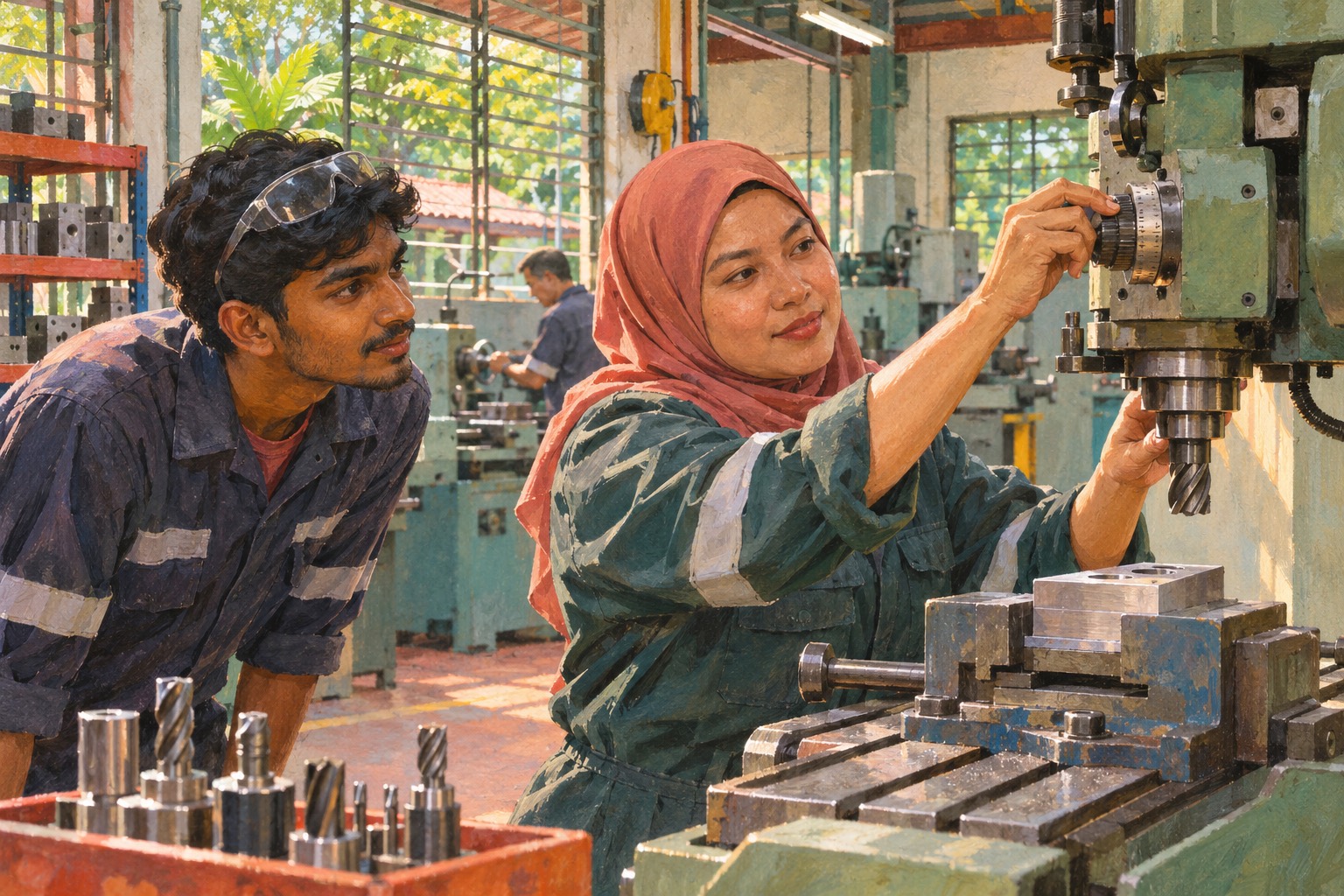
Prepared with AI assistance from linked reporting. The cover is an AI-generated editorial illustration. Spotted something we should correct?