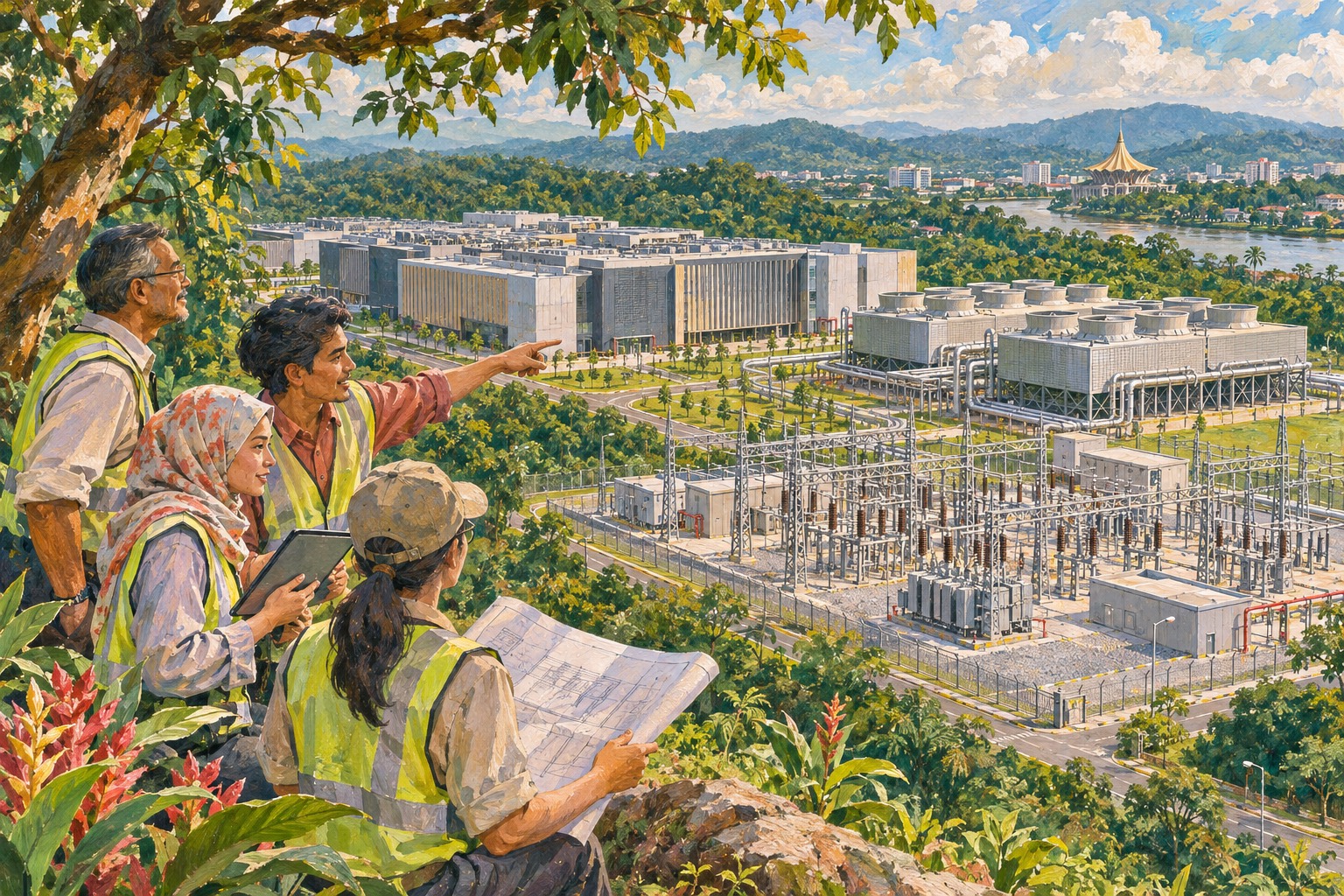
A SoftBank-led consortium involving Grab and Petroleum Sarawak has announced an artificial-intelligence infrastructure platform for Kuching and Peninsular Malaysia, with the investment reported at US$50 billion — approximately RM203 billion using the US$1 to RM4.06 rate cited with the 9 November announcement.
The figure is enormous: it is a programme-scale number, not the price of one data centre or a guarantee that the full amount will be spent immediately. The available announcement did not publish a site-by-site capital schedule, construction timetable, power requirement, financing breakdown or binding job count. Those details will determine how much of the headline becomes physical investment in Malaysia.
Prime Minister Datuk Seri Anwar Ibrahim welcomed the plan as support for Malaysia's National AI Action Plan 2026–2030. He said the consortium combines SoftBank's capital and expertise, Grab's regional AI capabilities and Petros's role in Sarawak. The government expects the project to meet federal and state requirements, including conditions tied to renewable energy.
Where the platform is supposed to go
Kuching is the named Sarawak location, while the Peninsular Malaysia component has not yet been narrowed to a publicly identified city in the material available on 9 November. That distinction matters for residents and suppliers. A national announcement cannot tell a town when land work begins, which grid connection is needed or how many construction contracts will be offered locally.
AI infrastructure usually includes high-density computing, data storage, networking, cooling, power equipment and secure links. It can also require substations, water systems or alternative cooling designs, depending on the site. Each component creates a different supply chain: civil engineering, electrical equipment, fibre, cybersecurity, maintenance and specialised operations.
For Kuching, the practical questions start with the chosen parcel, grid capacity and the environmental approvals required by Sarawak. For a Peninsular site, the same questions sit with the relevant state, local authority, utility and federal regulators. The consortium and governments should publish milestones separately so progress in one region is not mistaken for progress everywhere.
Jobs will depend on what is built here
Anwar said the investment should create skilled Malaysian jobs and opportunities for local businesses. Construction can support a large temporary workforce, while an operating data centre typically employs a smaller but more specialised team. Roles may include electrical and mechanical technicians, network engineers, security staff, facility operators and software specialists.
The difference between importing a complete system and developing local capability is substantial. Procurement targets, apprenticeships, certification and university partnerships can help Malaysians move beyond installation into maintenance, architecture and product development. Suppliers need early information about technical standards if they are expected to qualify rather than merely watch large contracts go overseas.
A credible local-benefit plan should state how many jobs are expected during construction and operation, what skills they require, and which training starts before the doors open. It should also distinguish direct employment from estimates of jobs supported elsewhere in the economy.
Electricity is the central constraint
AI computing can use very large amounts of power, and demand remains high around the clock. A commitment to renewable energy is therefore more than a branding line. The project needs to show whether clean supply comes from new generation, existing contracts, grid certificates or a combination, and whether additional demand could tighten supply for other users.
New solar or other renewable capacity can help, but variable generation still requires grid planning, storage, flexible demand or dependable backup. Gas turbines and diesel generators may appear in resilience designs, which affects emissions. Cooling can also consume power and, in some designs, water.
Malaysia should publish the expected power envelope at each stage and the infrastructure needed to serve it. If a dedicated substation or transmission upgrade is required, the public should know who pays and when it will be ready. The best outcome is new digital capacity accompanied by new clean generation, not a scramble for the same electricity already serving homes and factories.
What RM203 billion does and does not mean
The approximate RM203 billion conversion uses the RM4.06 rate reported on 9 November. Exchange rates move, so the ringgit value of future US-dollar spending will change. More importantly, investment announcements can cover several years, multiple partners and assets that are not yet contracted.
Readers should look for committed capital, signed land and energy agreements, regulatory filings and construction awards. Those are the points where a broad intention becomes measurable work. A consortium may also revise scope as technology, financing and demand change.
The headline figure should not be confused with government spending. The announcement describes consortium investment, while any public incentives, land arrangements or infrastructure support should be disclosed separately. That transparency lets taxpayers judge the exchange: what assistance is offered, what performance is required and what happens if milestones are missed.
Why Grab and Petros matter
Grab brings a regional technology platform and practical demand for mapping, fraud detection, recommendations and logistics tools. Its participation could connect infrastructure with services used across Southeast Asia, although the announcement did not allocate specific workloads.
Petros links the plan to Sarawak's energy and industrial strategy. That could help coordinate land, power and state priorities, but energy participation must still be evaluated against renewable requirements and grid impact. SoftBank, meanwhile, has global technology holdings and investment reach, giving the consortium access to capital and partners beyond Malaysia.
The combination is strategically interesting because it joins money, a regional technology operator and a state energy company. Governance will be just as important: who owns the platform, who controls customer data, where data is stored and which laws apply to cross-border workloads.
The next dates and documents to watch
A useful follow-up announcement would identify the Peninsular location, the Kuching site, the first construction date, phase-one capacity and completion target. Environmental and planning approvals should reveal land, cooling and utility requirements. Power agreements will show whether renewable supply is additional and deliverable.
For businesses, procurement portals and vendor briefings matter more than celebratory language. For workers and students, published role profiles and training dates are the signal that the skills promise is becoming real. For nearby communities, traffic, noise, water and grid information should arrive before construction, not after concerns surface.
Malaysia has attracted a genuinely consequential proposal. Its value will be measured in operating infrastructure, reliable clean power, skilled jobs, local contracts and transparent safeguards. The US$50 billion headline opens the conversation; the phase plan, approvals and public reporting will show what the country actually receives.
Sources & further reading
Prepared with AI assistance from linked reporting. The cover is an AI-generated editorial illustration. Spotted something we should correct?