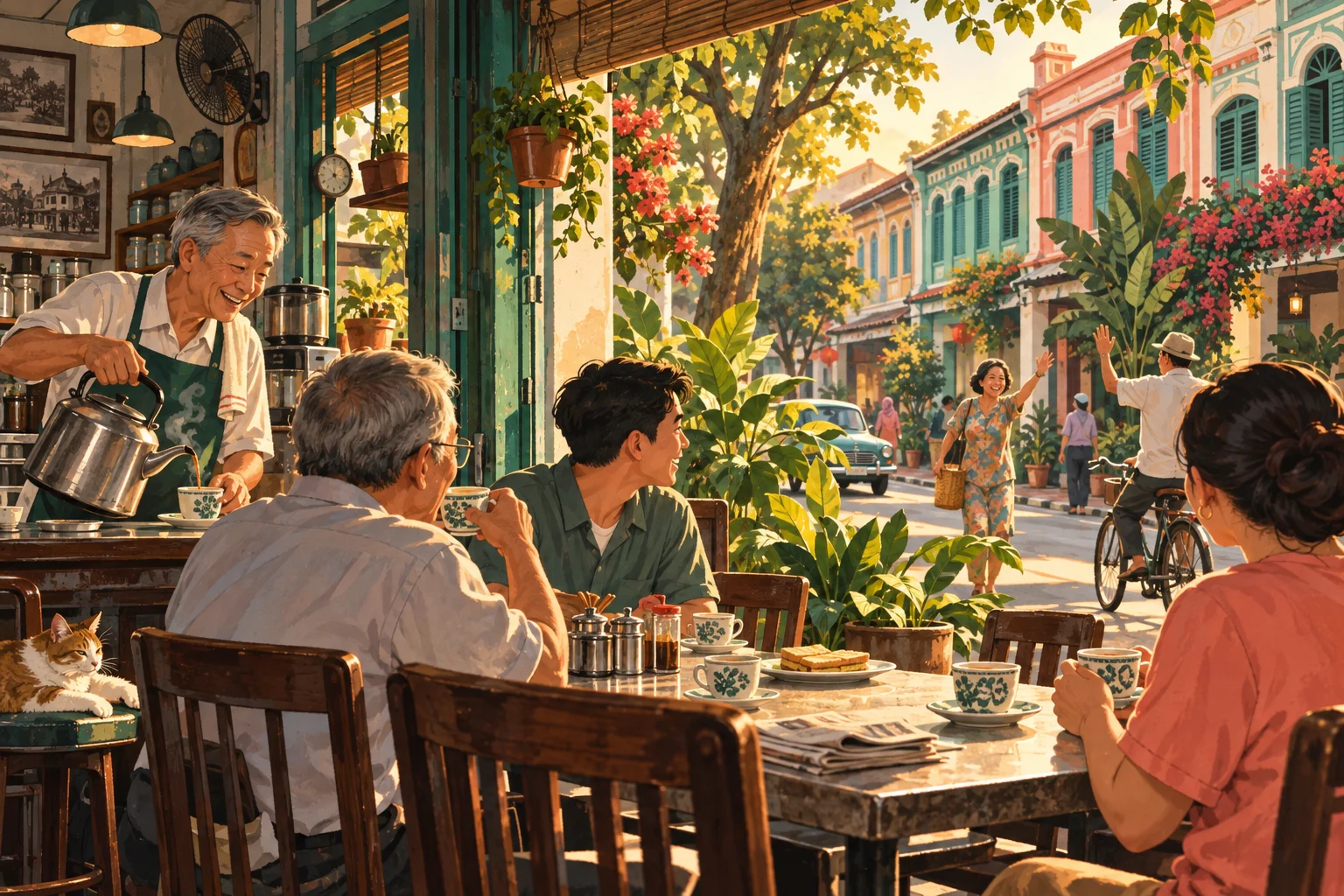
Home rarely announces itself with a grand entrance. Sometimes it arrives as a familiar voice asking whether you have eaten. Sometimes it is the clatter of cups at breakfast, the hiss of a pan behind a shop counter, or the relief of spotting a place where you already know what to order.
There are plenty of ways to describe Malaysia through landmarks, big events and impressive views. But everyday life has its own map. It connects a favourite table, a shortcut through the neighbourhood, a person who remembers your face and the small rituals that make an ordinary week feel yours.
The question that opens a conversation
“Dah makan?” can be a greeting, an invitation or a gentle way of checking in. The words are simple. What follows can be anything from a quick answer to a discussion that stretches well beyond the meal.
Food is an easy starting point because it gives people something concrete to share. You can disagree about where to find a good breakfast without needing a formal introduction. You can recommend a dish, ask what someone else ordered or make room for another chair. A conversation has already begun before anyone decides what it is about.
That does not mean every meal produces a wonderful moment. Some are rushed, some are quiet and some are simply about getting through a busy day. Their familiarity still matters. Knowing where you can pause makes a place feel less anonymous.
A neighbourhood has its own cast
Think about the people who make your usual route recognisable. There might be a shopkeeper who gives clear directions, someone who looks after the plants outside a building, or a neighbour who notices when a gate has been left open.
Their work is not always dramatic enough to become a headline. Yet these interactions shape how a place feels. A considerate person can make a difficult morning easier. A dependable business can become part of the routine you quietly rely on. A friendly greeting can remind you that the street contains people, not just traffic.
Not everyone has the same experience of a neighbourhood. Some residents feel deeply connected; others are new, busy or unsure how to join in. Making space for both is part of what gives local life its warmth. Familiarity works best when it leaves the door open.
The places we return to
A favourite place does not need expensive furniture or an impressive online following. It may win you over because the lighting feels comfortable, the service is straightforward or nobody makes you feel awkward about sitting alone.
Over time, practical details become personal ones. You remember which table stays dry when it rains. You know whether a place is good for a quick stop or a long conversation. You learn the difference between a busy atmosphere you enjoy and a noisy one that leaves you tired.
These attachments are not always permanent. Shops change hands, people move and routines shift. That is a reason to appreciate familiar places while they are there, rather than assume they will remain exactly as you remember them.
There is no single version of home
A late evening at a mamak may feel comforting to one person. For someone else, home is a family kitchen, a quiet walk, a small garden or the first moment they close the door after work.
Malaysia contains many languages, cultures and ways of living. An everyday feature cannot squeeze all of them into one perfect scene. It can, however, resist the idea that only one kind of experience counts as belonging.
You do not need to match somebody else's routine to be part of a place. The things that feel familiar to you may be different from those your friends describe. Comparing them can be enjoyable precisely because neither person has to supply the official answer.
Notice the ordinary without romanticising it
Appreciating a neighbourhood does not require pretending everything works beautifully. A pleasant corner can exist alongside a broken pavement. A lively food spot can still be difficult to reach for someone who needs step-free access.
The useful response is to hold both thoughts at once. Celebrate what makes a place welcoming, and pay attention to what prevents others from enjoying it. Ask whose experience is missing when a conversation describes a street as easy, safe or convenient.
A community becomes more interesting when its stories include practical concerns as well as affectionate memories. The person asking for better lighting belongs in that story just as much as the person recommending a stall.
Small ways to make the place more welcoming
You do not need to organise a major event to contribute. Learn a neighbour's name if they are comfortable sharing it. Give a new business a fair chance. Return a borrowed item promptly. When making a recommendation, explain why you like a place rather than simply saying everyone must go there.
Consider the people who may be left out of an invitation. A venue that suits your group might be inaccessible to a friend. A meal that works for you may not fit another person's dietary needs or budget. Asking first is a simple kindness that saves someone from having to explain later.
And let people choose how much they want to participate. A quiet neighbour is not necessarily unfriendly. Sometimes the most welcoming gesture is a warm hello with no expectation attached.
What belongs on your own map?
If you were showing someone your corner of Malaysia, where would you take them? The answer might reveal more than a list of famous places. Perhaps you would point out the shop that helped you during a difficult week or a stretch of pavement where the evening light always catches your attention.
Those are stories worth keeping. Write down a memory, ask permission before sharing someone else's experience, or tell us about a person whose everyday contribution deserves attention. Useful details help: the place, what makes it special and how we can learn more.
Home can be a very ordinary moment. Recognising it is one way of making sure it does not pass unnoticed.