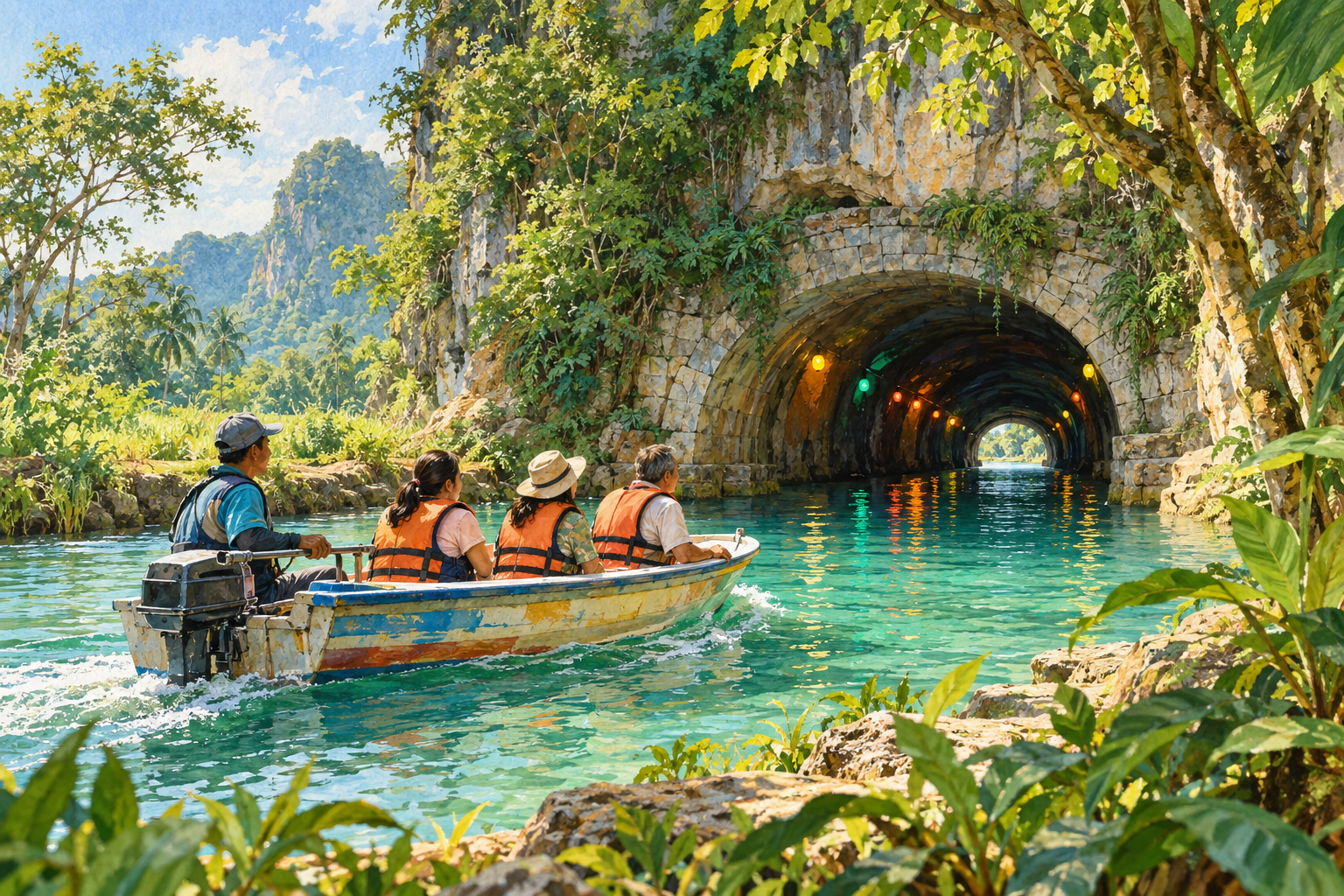
A boat ride in Kampung Wai takes visitors into a 765-metre tunnel through Perlis's limestone landscape. The surprising part: the waterway was built to divert floodwater, long before it became something people would plan a holiday around.
Bernama's 5 October report follows the Western Timah Tasoh flood diversion canal through the village near Kuala Perlis. A roughly half-hour boat outing includes the illuminated tunnel through the Nakawan range, with coloured lights adding a very different atmosphere to the journey.
Local guide Muhamad Hairie Akif Shahrun Anuar, 27, told the news agency that photographs and videos helped bring the place to visitors' attention. People come for the scenery, then learn why the canal exists. He also described opportunities for residents through kayaking, water cycling and village trips on three-wheeled motorcycles.
That is a rather good reason to spend time in a hometown that might otherwise disappear between bigger stops on a map. A piece of working infrastructure has given local people another way to earn, and given travellers a reason to look closer.
A long canal, a shorter outing
The place has a useful backstory. In June 2024, Bernama described Kampung Wai as around three kilometres from Kuala Perlis town, beside a 22-kilometre canal linked to Timah Tasoh Dam. That earlier report said recreational activity had drawn visitors since 2022.
It also followed the smaller businesses around the attraction: boat and kayak operators, and traders at Dataran Kampung Wai who benefited when people stopped nearby. The tourism story therefore predates this week's coverage; the fresh report catches up with a local attraction rather than announcing a brand-new tunnel.
Those distances describe different things. The overall flood-diversion canal is not the length of a standard visitor boat ride. Perlis's tourism office separately describes a three-kilometre stretch between Kampung Wai and the Kuala Perlis estuary. Mixing those figures together would make a short outing sound like a much bigger expedition.
For someone arranging a family visit, the sensible first question is the route the operator actually runs that day. Ask where it starts, whether it passes through the tunnel and where the boat returns. A location pin alone cannot answer all three.
The landscape is part of the appeal
The state tourism listing places the tunnel route between Kampung Wai and Kampung Tebing Tinggi in Bintong. It describes greenish canal water winding between limestone hills, with kayaking services available locally.
The office dates the limestone landscape to around 500 million years. That geological description belongs to the rock formations; it does not mean the constructed tunnel is ancient. Keeping those two ages apart makes the engineering story much easier to appreciate.
You are looking at an old natural landscape crossed by a modern water-management route. Neither needs a fantasy origin story to be interesting. Ask a guide about the canal's purpose as well as the best place for a picture, and the outing can offer more than a tunnel selfie.
The tourism office names Kayak Dahagi Perlis and Kayak Nakawan Perlis among local services. Its listing establishes that operators exist, rather than promising a particular package, timetable or price for your travel date.
Kuala Perlis has another water story nearby
A fuller visit can include the fishing settlements of Seberang Ramai. Perlis's tourism office describes seven villages at the mouth of the Perlis River, collectively known by that name.
They include Kampung Tengah, Kampung Hujung Tanjung, Kampung Tandiap and Kampung Pulau Ketam. The official account describes closely spaced houses, many over water, traditionally linked by footbridges. Some links have since been filled and turned into surfaced lanes.
Fishing remains central to the community's heritage. Boats moored along the riverbanks and jetties belong to that working setting, rather than a purpose-built backdrop for visitors.
That makes a walk here a different experience from buying a boat ticket. You are entering a lived-in neighbourhood. Keep access routes clear, ask before photographing people close up and treat doorways and household spaces as private. Those are simple visitor courtesies, not claims about a newly introduced local rule.
The canal and the fishing villages show two relationships with water in the same area: managing its movement inland and earning a living near the river mouth.
There is royal history on land, too
Muzium Kota Kayang offers a useful change of pace. According to the state tourism office, the museum occupies a former palace site associated with the Kedah-Perlis royal family.
Its architecture draws on Malay design and the long roof form of Perlis houses. Opened to visitors in September 2001, it is described as displaying 400 items across six galleries, covering history, archaeology, weapons, culture, royalty and the state's chief ministers.
The museum gives a visitor another way into the area: objects, buildings and the institutions that shaped the state, alongside the outdoor landscape. It also avoids squeezing every part of Perlis's past into a boat guide's short commentary.
Timah Tasoh itself appears in the tourism office's destination listings, with lakeside orchards and freshwater fishing among the attractions described. If a fruit-picking stop appeals, check directly with the property about permission, season and availability. A tourism description is not permission to pick from somebody's orchard.
Check today's arrangements before driving over
The 2024 report included prices for boat and kayak outings. Those are historical rates, so this article is not using them as a current booking quote. Confirm the complete charge, trip duration and number of passengers with an operator before paying.
Ask about life jackets, weather-related changes and suitability for everyone in your group. The canal's recreational use does not remove its flood-management purpose, and a calm-looking illustration cannot tell you the water conditions on arrival.
Leave room in the day for the village rather than racing in, taking one photograph and leaving. A local operator, a neighbourhood stop and a visit to the museum can make the tunnel part of a more interesting Perlis story. The first conversation to have is with the people running the boats.
Sources & further reading
Prepared with AI assistance from linked reporting. The cover is an AI-generated editorial illustration. Spotted something we should correct?