Timor-Leste has secured the ASEAN seat it spent 14 years pursuing. Its next challenge is making membership visible in jobs, training and investment, and Foreign Minister Bendito dos Santos Freitas says Malaysia is one of the partners Dili wants beside it.
Speaking in Kuala Lumpur on 13 November, Freitas pointed to investment, education, skills training and institution-building. Malaysia supported Timor-Leste’s entry and has had an official presence in Dili since before independence.
Membership opens doors; companies still need projects
Joining ASEAN gives Timorese officials access to regional meetings and agreements, but factories and employers do not appear automatically. Investors need reliable rules, infrastructure, workers and viable markets. Dili’s request is therefore practical: turn political inclusion into bankable projects and training that local people can use.
Malaysian companies know sectors that matter to a young economy, including construction, telecoms, banking, food production, education and technical training. The opportunity comes with risk: Timor-Leste is a small market with infrastructure gaps and heavy dependence on petroleum savings.
Skills can travel faster than large investments
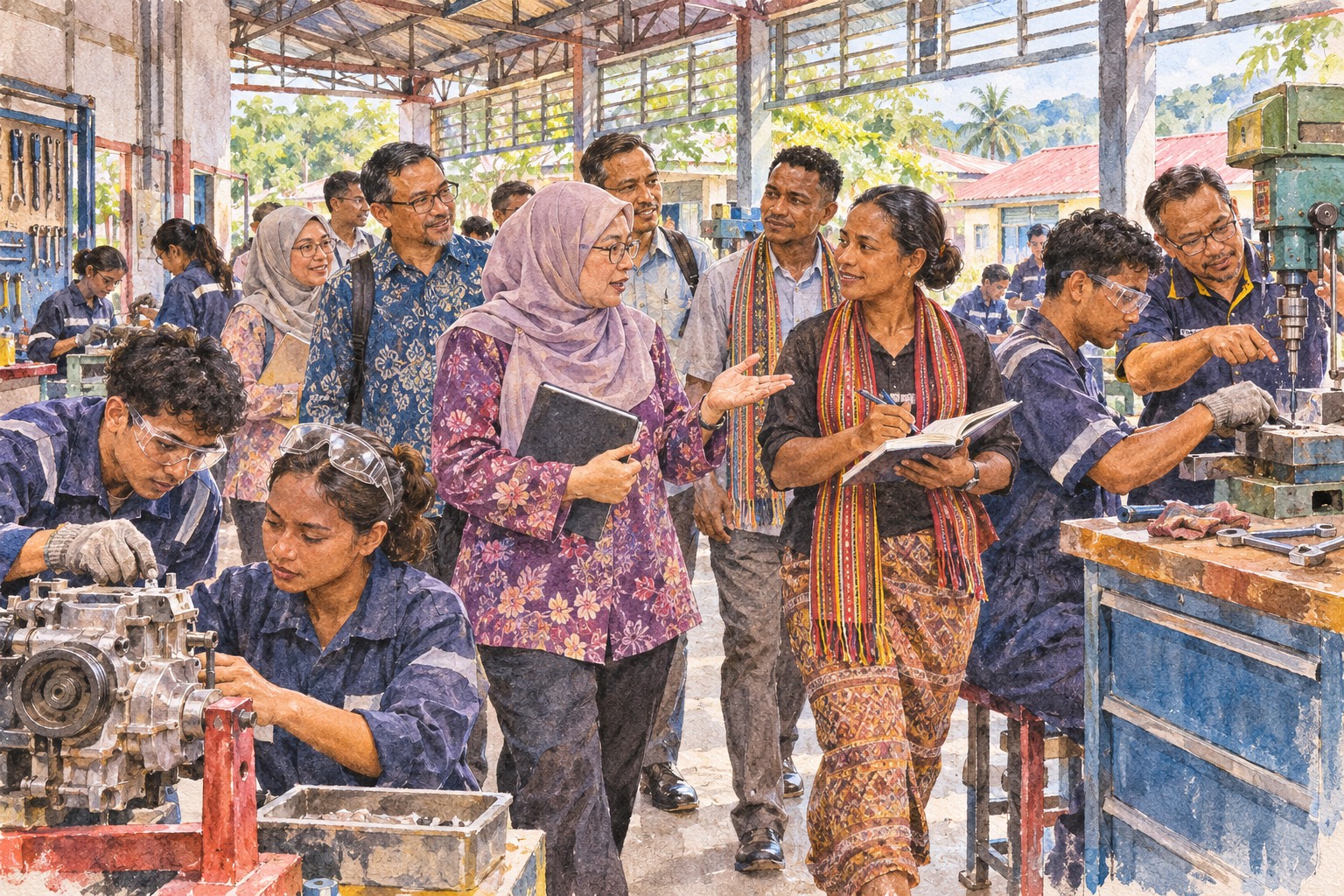
Training partnerships may deliver earlier results than a major industrial plant. HRD Corp has already worked with Timorese counterparts on technical and vocational education. Scholarships, trainer exchanges and recognised qualifications can help young workers enter ASEAN labour markets while building capacity at home.
For Malaysia, this is also a people-to-people investment. Timorese students who study here build professional networks that can support later business and government cooperation. The strongest programmes will publish completion and employment outcomes rather than counting only enrolments.
What investors should ask
A serious Malaysian proposal needs clarity on land, licences, taxation, local partners, foreign-exchange access and dispute resolution. It should also identify which jobs will be filled locally and what training is required before operations begin.
Timor-Leste must avoid deals that extract public concessions without transferring skills or creating durable revenue. Transparent procurement and contracts are especially important as the country works to diversify beyond oil and gas.
ASEAN’s credibility is part of the test
The bloc’s first expansion since the 1990s will be judged by whether its newest member can participate meaningfully, not merely sit in meetings. Bigger members can help by opening education, standards and supply-chain pathways while expecting Dili to strengthen governance.
Malaysia’s early diplomatic support gives it trust, but friendship alone does not create livelihoods. The next useful signs will be named projects, funding, training places and implementation dates.
For Malaysian businesses, Timor-Leste is not a giant consumer market. It is a neighbouring economy where an early, patient partner can help shape institutions and grow alongside local capability. That is a longer proposition than a quick export sale, and potentially a more valuable one.
A young population needs pathways, not just promises
Timor-Leste’s population is young, making education and employment central to the membership dividend. A training programme is valuable when its certificate is recognised by employers and when graduates can find work without permanently draining the country of skilled people.
Malaysia can help design programmes that combine classroom teaching with placements in hotels, construction, manufacturing, agriculture and digital services. Employers should publish how many trainees complete the programme, what they earn and whether they return to positions in Timor-Leste.
Diversification is urgent
Petroleum revenue has funded much of the state, but finite savings cannot substitute forever for a broader tax base and productive private sector. Tourism, fisheries, agriculture and services are often discussed as alternatives, yet each needs roads, ports, power, standards and market access.
Malaysian investors should resist treating ‘first mover’ status as permission to accept vague economics. Projects need realistic demand, environmental assessment and local supply plans. Timorese authorities, in turn, can improve confidence by making licences and procurement rules transparent.
Education links already have a foundation
Malaysia and Timor-Leste have worked together through universities, skills agencies and public institutions. Scaling that foundation could include lecturer training, Bahasa and English support, digital administration and technical certification.
The most useful partnerships solve a named bottleneck. If a construction programme lacks supervisors, train supervisors. If a hospital system lacks biomedical technicians, build that course with equipment and apprenticeships. Broad memoranda without budgets or dates are harder to measure.
Small businesses should be included
Large infrastructure attracts headlines, but local restaurants, repair shops, farms and transport operators spread income more widely. Malaysian companies entering Dili can source locally, mentor suppliers and divide contracts into sizes that capable small firms can bid for.
Digital payments and accounting support can help those firms prove revenue and qualify for finance. This is the unglamorous institutional work that turns regional integration into stronger businesses.
What Malaysia gains
Malaysia gains a partner in a strategically placed Southeast Asian country, opportunities for education and professional services, and a chance to shape ASEAN standards with its newest member. It can also learn from Timor-Leste’s Portuguese-language links to other markets.
But the relationship will be judged in Dili, not Kuala Lumpur. If projects create mostly imported jobs, opaque concessions or debt without revenue, goodwill will fade.
The next scorecard
Watch for specific investment missions, scholarship numbers, TVET places, signed commercial projects and completion dates. A joint implementation unit could publish progress and obstacles rather than announcing the same intention each year.
ASEAN membership gives Timor-Leste a larger table. Malaysia’s contribution can be helping its newest neighbour arrive with the skills, institutions and enterprises needed to use that seat.
Institutions decide whether momentum lasts
Investment promotion can bring executives into a room, but customs, courts, regulators and local banks determine whether a project survives. Technical assistance in these institutions may be less visible than a new building and more important over twenty years.
Malaysia can share practical systems while avoiding a copy-and-paste model. Timor-Leste’s language, law and local priorities require programmes designed with Timorese officials and communities.
The best outcome is not dependence on Malaysian expertise. It is a partnership that leaves Timor-Leste able to train its own people, regulate its own projects and negotiate the next deal from a stronger position.
Sources & further reading
Prepared with AI assistance from linked reporting. The cover is an AI-generated editorial illustration. Spotted something we should correct?