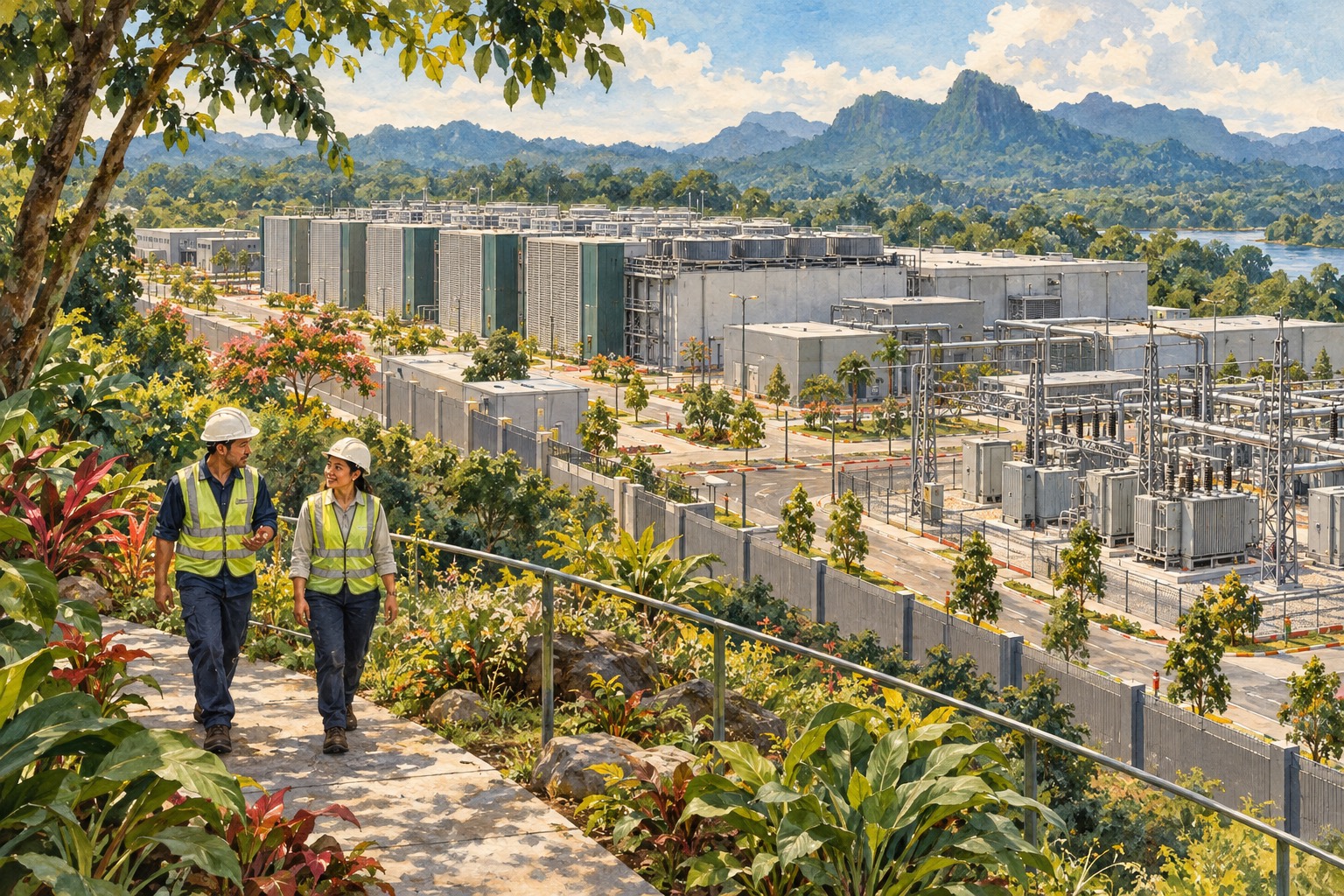
A US$50 billion investment plan sounds enormous. At about RM204 billion, it is. But for a Malaysian looking for a better job or a small business hoping to win a contract, the useful question is what would actually be built here.
On 24 October, Prime Minister Anwar Ibrahim said a major global investor had chosen Kuching and Peninsular Malaysia for a proposed investment covering AI, new technology and data centres. Bernama reports that the intention was conveyed during a video conference earlier in the week.
The investor was not named in the report. Neither were individual projects, a spending timetable or a confirmed number of jobs. This is an investment intention described by the prime minister, rather than money already spent or a recruitment campaign already open.
The ringgit equivalent uses Bernama’s rate of US$1 to RM4.08 in its 24 October report. It is an approximate conversion of the proposed amount, not a separate government allocation.
The jobs story needs more than a big number
Anwar linked the proposal to better employment opportunities for young Malaysians. He also called for stronger training in emerging technologies and a move towards higher-value activities.
There is a useful lesson in Malaysia’s existing digital investment record. In its earlier discussion of digital inclusion, MIDA reported nearly RM162 billion in approved digital investments from 2021 to March 2024. Data centres and cloud computing accounted for RM123.5 billion of that total, alongside more than 3,693 direct job opportunities associated with notable projects.
Those are historical figures, not the forecast for this new proposal. They show why the investment sum and the employment count should be read separately. A capital-intensive project can carry a very large price tag without recruiting anything like the workforce a reader might imagine from the headline alone.
For students, the information worth waiting for includes the actual employers, qualifications, apprenticeships and hiring dates. An engineering job, a construction contract and a software research role create different routes into the industry. Announcing a sector does not tell an applicant which route is available.
Local businesses need a way into the supply chain
MIDA’s sustainable infrastructure guidance describes opportunities for local manufacturers to join the data centre supply chain. Its discussion also connects cloud services with the digital needs of smaller businesses, including reliability, security and the ability to expand services.
These are possible channels for wider benefits, rather than evidence that this particular investor has already appointed Malaysian suppliers. A local company would still need to know what is being purchased, the standards required and how procurement works.
That distinction matters for a business owner considering new equipment or extra staff. A signed contract and a public statement of interest carry different levels of certainty. Spending in anticipation of an unnamed project would put the commercial risk on the small company before the buyer’s requirements are clear.
The broader policy direction is to judge investments by what they deliver. MIDA’s January 2026 explanation of the New Incentive Framework links incentives with measurable outcomes such as job quality, technology transfer, domestic linkages and sustainability. It described manufacturing implementation first, with services to follow in phases.
That framework is context for Malaysia’s priorities; the announcement reviewed here does not identify which incentives this investor has applied for or received. The practical test remains whether a project creates capabilities that Malaysian workers and suppliers can use beyond its opening ceremony.
A data centre also has neighbours
There is another audience for a proposal of this scale: people living near the eventual sites. They need information about land use, power and water, not only the value of the investment.
MITI’s sustainable data centre guideline sets out measures for energy, carbon and water efficiency. Power Usage Effectiveness compares a facility’s total energy use with the energy consumed by its IT equipment. Water Usage Effectiveness relates water consumption to IT energy demand. These measures help describe how efficiently a facility operates.
The guideline also encourages clean energy and more efficient use of water. Its relevance is straightforward: computing infrastructure has physical requirements. A server hall still needs an electricity connection, cooling and a suitable location, even when the services it supports appear on a phone screen.
For residents, an efficiency target becomes useful when it is accompanied by project-specific quantities and a clear account of where those resources will come from. The current investment report does not supply those details, so it cannot settle questions about a particular neighbourhood’s infrastructure.
An efficient facility can still be a large user
ISIS Malaysia’s analysis of AI and climate policy warns against reading efficiency ratios as a complete picture of resource demand. More powerful, densely packed computing equipment can increase total consumption even when a building performs well against a relative efficiency measure.
Its analysis also describes several layers of decision-making: investment coordination, state and local planning, and separate utility approvals. A national announcement therefore should not be read as confirmation that every site has cleared every process.
This is particularly relevant when comparing projects. Two facilities could have similar efficiency ratios yet draw very different amounts of electricity. Readers need both the ratio and the scale before deciding what a proposal means for local capacity.
None of that establishes a shortage or an adverse impact from the unnamed plan. It identifies the information needed to assess one. Claims that the proposal will automatically improve household bills, or automatically worsen them, would run ahead of the evidence available today.
Watch for the next concrete announcement
The proposal offers a potentially significant opening for Malaysia. The next useful developments would be an identified investor, named sites, a delivery schedule, employment commitments and published resource plans.
Until those arrive, students can watch for genuine training and hiring notices, businesses can look for formal procurement information, and residents can follow the relevant planning process. Those steps turn a headline measured in billions into something a Malaysian can actually evaluate: a job to apply for, a contract to price, or a project to understand.
Sources & further reading
Prepared with AI assistance from linked reporting. The cover is an AI-generated editorial illustration. Spotted something we should correct?