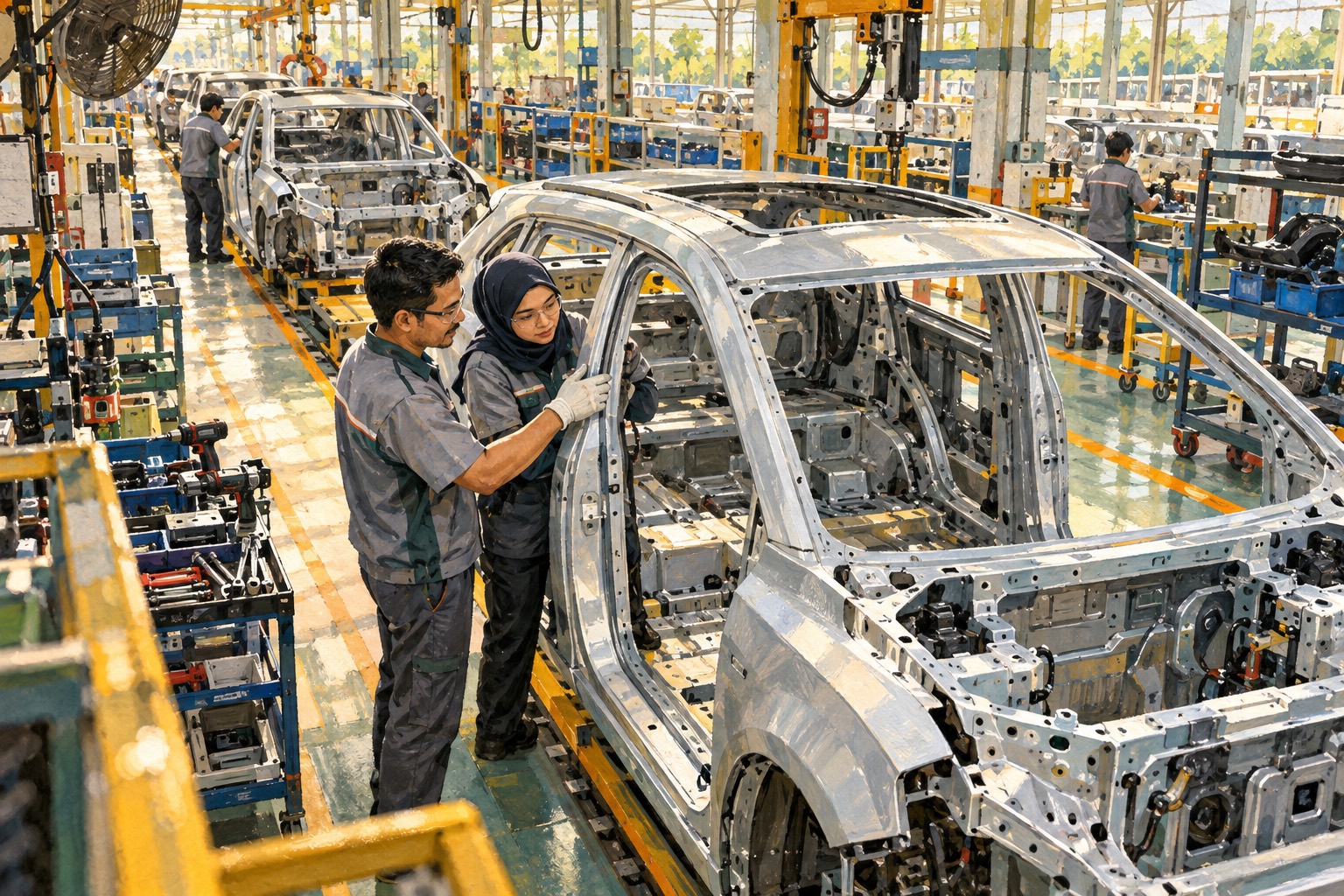
A Malaysian-built car means something different depending on which side of the factory gate you stand. A buyer may be waiting for a lower price. A worker in Kulim may be looking for a longer-term place in an industry that is changing fast.
A 23 October analysis by paultan.org puts that tension in focus following BYD Malaysia’s decision to use Inokom as its local assembly partner. The partnership was announced earlier, on 15 October; this is a closer look at what the move could deliver, rather than a new factory announcement.
The arrangement brings attention to an existing manufacturing base in Kedah. It also raises a useful question for Malaysian buyers: when production moves here, what actually changes in the car, its price and the work behind it?
Local assembly can create industrial value. It does not, by itself, promise a discount on a particular model. The evidence for each outcome needs to be examined separately.
Kulim already has the people and the machinery
In a June statement, Sime described Inokom’s 200-acre Kulim facility as an integrated operation with body, paint and assembly shops, plus centralised warehousing. It reported a fully Malaysian workforce of more than 2,700 skilled employees at that time.
The company also said its operations supported 370 local vendors. Those are existing figures from that statement, not additional jobs or suppliers created by the BYD agreement.
This existing base helps explain the appeal of a contract assembler. A new customer can build on production infrastructure and an experienced workforce rather than begin every element on an empty site. That does not make the technical work trivial: each vehicle programme still has its own manufacturing and quality requirements.
For the surrounding economy, the point of interest is whether an incoming programme strengthens the work already done there. An agreement becomes more meaningful when it leads to actual production, sustained orders and skills that workers can carry into later programmes.
The agreement has limits to what it tells us
Reporting on the 15 October announcement says BYD selected Inokom after reviewing local manufacturing capabilities. It also records an important omission: the release did not identify which models would be assembled first.
Without those model details, it is premature to attach a speculative Malaysian price cut to a specific BYD vehicle. Buyers also need a production timetable and confirmed specifications before treating the future locally assembled version as an alternative they can actually order.
For a worker or supplier, the equivalent missing details are the scope and duration of the programme. An assembly partnership is a route towards work. It is not the same thing as a published vacancy, a purchase order or proof that every component will be made locally.
That is why the next announcements deserve attention beyond the model name. Production volumes, localisation plans and training requirements would help show how much of the opportunity reaches Malaysian businesses and employees.
Why the badge does not calculate the price
CKD stands for completely knocked down: vehicles are assembled locally from supplied parts or kits. CBU means completely built up, with the finished vehicle imported. These terms describe the production route, rather than a complete explanation of the final retail bill.
Paultan’s fresh analysis notes that costs, exchange rates, local sourcing and policy all influence the result. It also points out that moving an EV from one tax-supported arrangement to another does not necessarily generate the saving buyers remember from some petrol-car localisation exercises.
MIDA’s earlier explanation of EV incentives helps with the background. It set out import and excise exemptions for imported EVs through the end of 2025, alongside a longer incentive period for locally assembled EVs through the end of 2027. Those historical policy dates help explain why comparisons must use the right period and scheme.
They should not be treated as a universal calculator for a future model’s price. The applicable approval, vehicle specification and current tax treatment still matter. A production announcement alone cannot tell a buyer the final amount on a quotation.
There is more work than fitting parts together
MIDA’s automotive industry overview describes an ecosystem that includes manufacturers, component suppliers and service providers. It identifies electrification, technology development and supplier capability as parts of the industry’s direction.
That wider network is where the local benefit can deepen. A factory needs consistent parts, quality systems and skills alongside the assembly line. Strengthening those capabilities can matter to firms that supply more than one brand or programme.
MIDA’s account of an earlier vendor engagement exercise is revealing here. Companies discussed barriers including cost, quality, technology gaps and the availability of suppliers for more advanced components. Localisation therefore involves meeting demanding requirements, rather than simply selecting the nearest business.
For a Malaysian vendor, a new assembly programme can be an opening to improve capability and compete for work. It can also require investment and preparation. Whether that effort pays off depends on the actual requirements and contracts, not the optimism surrounding the announcement.
Skills are a concrete place to look
A separate automotive talent initiative announced by Feytech and hosted on MIDA’s website connects five technical public universities with the manufacturing sector through an internship pipeline. It is not a BYD recruitment programme, but it illustrates the sort of practical bridge needed between a growing industry and Malaysian students.
For someone considering a technical career, watch for named training partners, recognised qualifications and real placement arrangements. For a buyer, compare the confirmed equipment, warranty, after-sales support and final quotation when a locally assembled model is offered.
Both groups have a legitimate stake in what happens at Kulim. The strongest result would be a competitive product backed by durable local capability. The next production details will tell us much more about that than the letters CKD on their own.
Sources & further reading
Prepared with AI assistance from linked reporting. The cover is an AI-generated editorial illustration. Spotted something we should correct?