A car being pushed sideways is the sort of storm footage that makes you stop scrolling. On 13 October, Paul Tan reported videos from Damansara showing powerful winds moving vehicles, including one car striking another near a toll plaza.
The report did not establish whether anyone was injured. Nor should a social-media description of a whirlwind be treated as a confirmed tornado classification. What the footage does bring into focus is a much more ordinary problem: a trip home can become dangerous before you have time to rethink it.
That makes this a useful moment to do the unglamorous part of storm preparation. Decide how your household will communicate, where essential supplies are kept and what happens if the usual road home cannot be used.
Start with the people who might be somewhere else
Disasters do not wait until everyone is home together. One person may be at work, another collecting a child, and an older relative alone in a different neighbourhood.
The US government's Ready.gov planning guide starts with that separation problem. It recommends agreeing how household members will contact one another, reconnect and reach a familiar meeting place. This is general preparedness guidance, rather than a new Malaysian evacuation instruction.
For your own household, discuss the places people actually go. A plan built around being together in the living room is less useful if the disruption happens during the evening commute. Include the people who help with childcare or care for a relative, and make sure they know the arrangement too.
Write down the important contacts. Ready.gov's family plan includes household information, meeting places and relevant medical information. Keep the details somewhere household members can find them, rather than leaving the entire arrangement in one person's memory.
A warning needs an action attached to it
Ready.gov asks families to decide how they will receive alerts, where they will shelter and which evacuation route they will use. Those are separate questions. Receiving a warning does not automatically tell every member of a household what they are expected to do.
For Malaysia, use local official weather information and instructions. Paul Tan's report points readers to METMalaysia's website, the myCuaca app and its official social channels for forecasts and warnings. Do not use an old screenshot as a substitute for checking the current notice.
The practical discussion can be simple: who checks the warning, who contacts the family and which journey can be delayed? If authorities issue an evacuation order for your location, follow it. A pre-agreed family plan should support that instruction, rather than compete with it.
There is no need to wait for a dramatic clip from your own street before having this conversation. Planning works best when you still have time to change an arrangement calmly.
Pack for the household you have
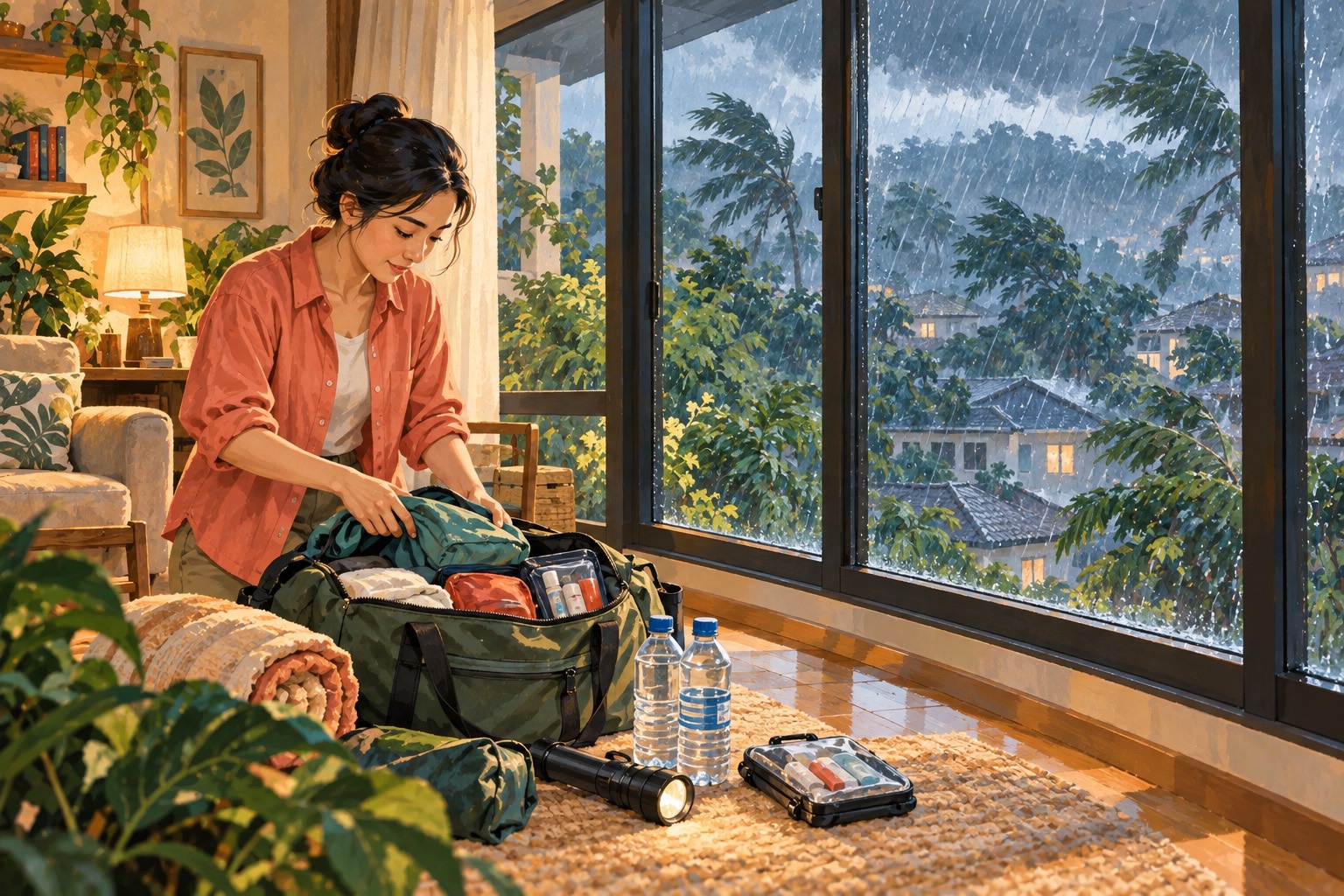
An emergency bag is not a competition to buy the longest list of gadgets. Ready.gov recommends basic supplies such as drinking water, non-perishable food, a flashlight, spare batteries, a first-aid kit, a whistle and a phone charger with backup power.
Store supplies in containers that are easy to carry, with smaller items protected in airtight bags. Important documents can be kept in a waterproof portable container or saved electronically. The point is to be able to find and carry them when needed.
Then adjust the kit for the people using it. A household with an infant needs different supplies from one with an older adult who uses medical equipment. Prescription medicines, glasses, hygiene supplies, suitable clothing and pet food may belong in the plan.
Ready.gov also asks families to consider dietary needs, disabilities, languages, cultural needs and responsibilities for helping others. A bag can look well stocked and still miss the one item its owner needs every day. Work through those needs with the people concerned.
Check where the bag is, not just what is inside
Keeping supplies in a designated place helps everyone know where to look. Ready.gov recommends preparing for home, work and the car because an emergency can happen while you are away from your main kit.
That does not mean copying the same bag three times without thinking. The supplies needed while sheltering at work may differ from those needed if a vehicle is stranded. Consider what is practical for each location and who will use it.
Supplies also need maintenance. Replace expired items and review changing household needs. Children grow, medicines change and contact numbers become outdated. Put a review on the household calendar so the kit remains useful after the day it was assembled.
Practise the plan as well. Can everyone locate the supplies and name the meeting place? Discovering that people have understood different arrangements is far easier to fix before a real disruption.
Floodwater hides more than its depth
The US National Weather Service warns that water levels and flow can change quickly during flooding. It advises staying out of floodwater, moving to higher ground when necessary and obeying evacuation instructions.
Its guidance also explains why a flooded road cannot be judged by appearance alone. Water can hide a washed-out surface, sharp debris, electrical hazards and chemicals. Walking or driving through it can expose you to dangers you cannot see from the edge.
Do not drive around a barricade. A familiar road is not necessarily in its familiar condition after flooding, and the vehicle ahead getting through does not establish that the route is safe for yours.
Electrical hazards matter indoors too. The weather service advises staying out of rooms where water covers electrical outlets or cords are submerged. Do not enter water that could be electrified. Follow local responders' instructions about access and evacuation.
The Damansara videos capture a few frightening seconds. A household plan deals with the hours around them: reaching people, changing a journey, locating supplies and following a safe route. Pick one of those arrangements to settle with your family today, while the conversation can still happen without rushing.
Sources & further reading
Prepared with AI assistance from linked reporting. The cover is an AI-generated editorial illustration. Spotted something we should correct?