Malaysia has already registered more hybrid cars in nine months of 2026 than it did throughout 2025. Yet the word “hybrid” on a registration chart can describe cars with quite different relationships to petrol, electricity and a charging cable.
Paul Tan’s analysis of JPJ data, published on 11 October, puts January–September hybrid registrations at 40,181. The full-year 2025 total was 31,190. September alone contributed 5,448, representing 7.3% of new car registrations that month.
Those are registration figures, rather than a count of orders waiting at dealerships. The official data.gov.my dashboard was updated on 10 October with data through the end of September, making this a useful moment to look beneath the category’s label.
A growing category is not one type of powertrain
The registration grouping includes full hybrids, mild hybrids and plug-in hybrids. Paul Tan also notes that some model names cover different versions, making it difficult to assign every registration to a precise variant from the broad data alone.
That limits what a headline number can tell us about individual choices. A rise in hybrid registrations does not establish that all those drivers have installed chargers, or that they use their cars in the same way.
For someone comparing cars, the important next step is identifying the actual system in the exact variant being considered. Two cars advertised with the same broad word may need different daily routines.
An ordinary hybrid does not need a plug
The US Department of Energy’s Alternative Fuels Data Center explains that a hybrid electric vehicle combines an internal-combustion engine with one or more electric motors and a battery.
In a conventional HEV, the battery is charged through the engine and regenerative braking. There is no external charging requirement because the car is not designed to plug into an off-board electricity supply.
Regenerative braking uses the motor as a generator, capturing some energy during slowing and storing it in the battery. This does not create unlimited free energy; it recovers energy that would otherwise be lost during braking.
The electric motor can also assist the engine, while the battery can support auxiliary loads. Depending on the design, this can allow a smaller engine and reduce engine idling when the vehicle is stopped.
Mild and full hybrids are different again
A mild hybrid uses its battery and motor to help the engine. The Department of Energy explains that these systems cannot drive the vehicle using electricity alone.
A full hybrid has a larger battery and more powerful motor capability. It can move on electric power for short distances and at low speeds, although the exact operation depends on the vehicle’s design and conditions.
That is why a salesperson’s mention of an electric motor is not enough to establish how much electric-only driving a car can do. The motor’s role matters as much as its presence.
For a test drive, a useful question is what the system does during slow traffic, acceleration and stopping. The answer should refer to the actual model and variant, rather than a promise attached to hybrids generally.
A plug-in hybrid adds an external charging route
A PHEV still combines an engine with electric propulsion, but it also has a battery that can be charged from an external electricity supply. The Department of Energy describes a charge port and onboard charger among its components.
That external charging route is the practical difference a household needs to consider. A car might be able to take electricity from the grid, but the owner still needs a workable way to connect it.
PHEVs typically use electric power until the battery is depleted and then rely on the combustion engine, although system behaviour varies. Their batteries can also receive energy through the engine and regenerative braking.
Consequently, electric driving range, petrol operation and charging time are separate specifications. One figure should not be used as shorthand for all three.
Apartment parking changes the conversation
For a household with assigned parking and a usable charging arrangement, the questions will be different from those of a driver who has nowhere reliable to plug in. Neither situation can be read from a national registration total.
Before choosing a plug-in car, ask the building management about the actual charging arrangements, access rules and approvals. Then check whether those arrangements fit the times the car is normally parked there.
For a conventional hybrid, that particular plug-in routine is absent. It still needs the usual model-specific checks on fuel use, maintenance and battery warranty, but its battery charging happens through the vehicle’s own systems.
The useful comparison is the routine each car requires at your home and along your usual journeys. A technology can be appealing in principle and awkward in a particular parking situation.
An EV removes the petrol engine from the equation
An all-electric vehicle uses a traction battery and electric motor rather than an internal-combustion engine. Its electricity must ultimately come from charging, with regenerative braking recovering some energy along the way.
That makes it different from both a conventional hybrid and a plug-in hybrid. A battery in all three does not make the ownership routines identical.
When reading a brochure, look separately for engine details, charging capability, battery capacity and any stated electric-only range. If the description is unclear, ask for the specification sheet for the exact version being sold.
What the September result actually tells us
The registration data gives a clear picture of growth in a broad vehicle category. It does not, by itself, explain every buyer’s reasons or establish which powertrain is best for every household.
There is also no need to turn a registration record into a prediction that petrol-only cars will disappear on a particular timetable. The figure measures vehicles registered during a stated period, rather than future purchase decisions.
For shoppers, the growth makes understanding the labels more worthwhile. Start with one practical question before getting lost in the badge: does this particular car expect you to plug it in? The answer immediately narrows the daily routine you need to investigate.
Sources & further reading
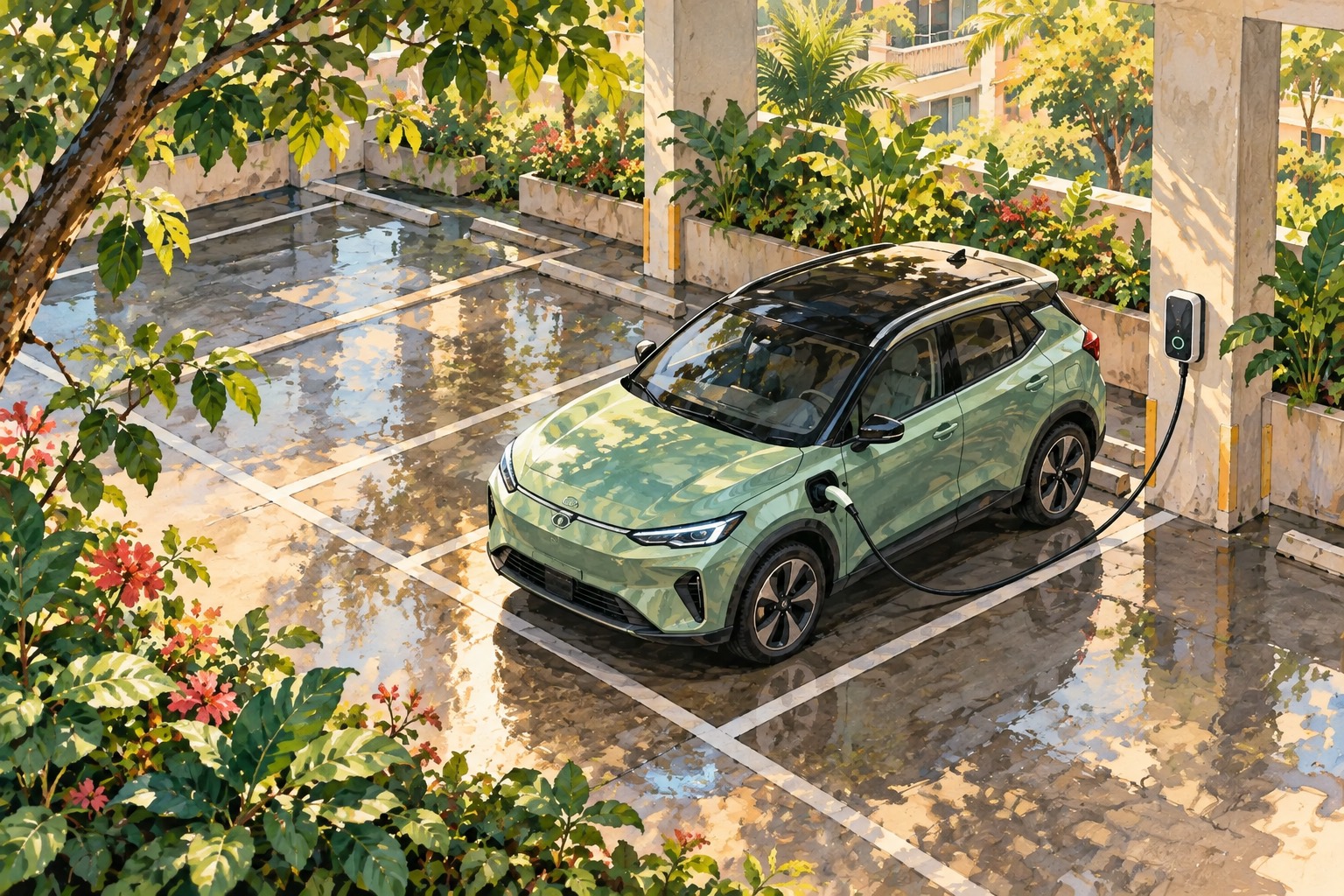
Prepared with AI assistance from linked reporting. The cover is an AI-generated editorial illustration. Spotted something we should correct?