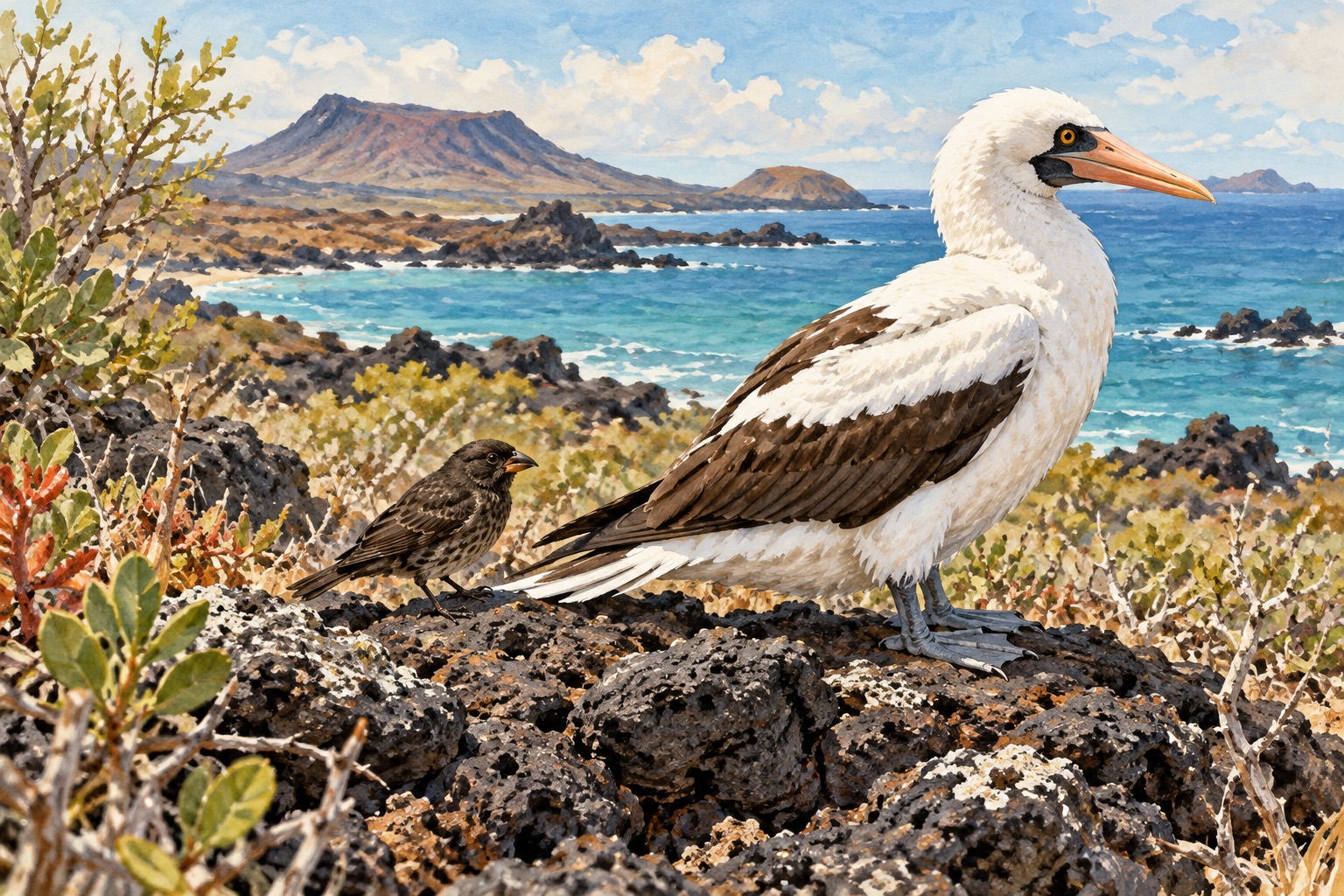
A small bird with a sharp beak lives on two remote Galápagos islands and sometimes feeds on the blood of much bigger birds. The vampire ground finch is real, even if its name sounds like something invented for October.
New Popular Science reporting, published on 18 October, draws on zoologist Daniel Baldassarre’s observations of the finches on Wolf and Darwin islands. Their hosts include Nazca boobies, much larger seabirds sharing the same isolated setting.
The striking detail is the feeding behaviour. The important qualification is that blood is not their entire diet.
The name leaves out the seeds and insects
Baldassarre told the publication that the birds are opportunistic feeders. His team observed them eating seeds, insects and broken seabird eggs as well as blood.
He estimates blood accounts for about a tenth of their diet, based on unpublished data. That figure should be read as a researcher’s preliminary estimate, not a newly established result from a peer-reviewed study.
One idea is that blood becomes more important during extreme drought, when other resources are scarce. The reporting explicitly says that explanation still needs further research. An appealing survival story is not automatically a settled one.
Their gut offers another part of the puzzle
There is older, published research on the birds’ internal biology. A 2018 paper in Microbiome compared the gut microbial communities of vampire finches with those of other Galápagos finches.
It found differences associated with their unusual feeding habits. Researchers were interested in how consuming blood relates to the microbes in the birds’ digestive systems, rather than treating diet as something explained by the beak alone.
That paper is background to the fresh reporting. It is not a discovery made this week, and it does not establish the unpublished diet percentage above.
For readers in Malaysia, this is a story about a specialised island species, not evidence that birds around the neighbourhood are taking up blood feeding. The geography and species are part of what makes it unusual.
The surprise is more interesting when the boundaries stay intact: a real blood-feeding bird, a mixed diet and scientific questions still being tested. Nature has supplied enough oddness here without giving the finch fictional fangs.
Sources & further reading
Prepared with AI assistance from linked reporting. The cover is an AI-generated editorial illustration. Spotted something we should correct?