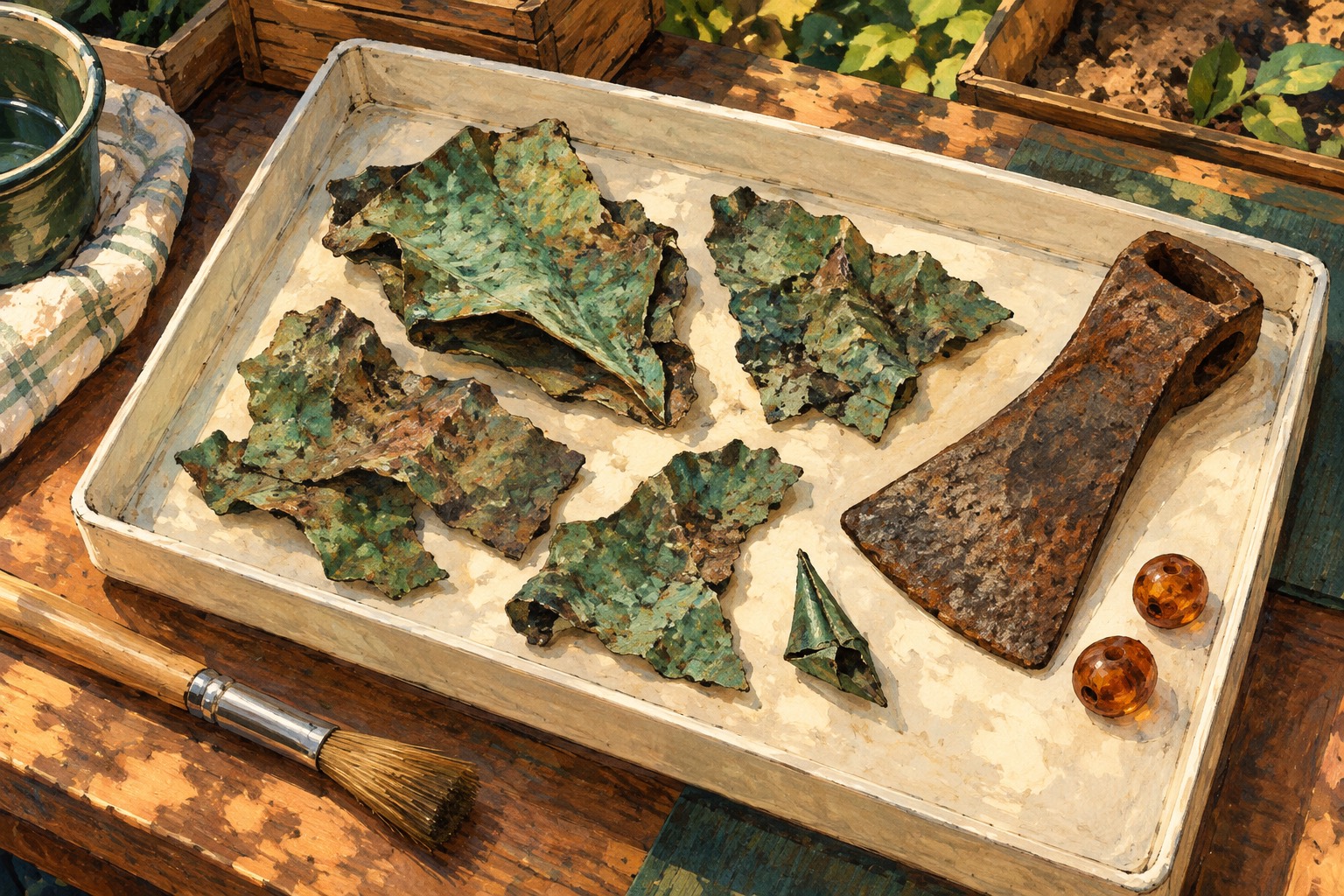
Archaeologists in northeastern Poland initially thought the battered bronze object they were uncovering was a vessel. Then its tip emerged: it was a rare helmet, far from the region normally associated with its type.
A study in Antiquity, reported on 31 October, describes the Berru-type helmet at Łysa Góra. It had been crushed and deposited in a pit alongside iron tools, including adzes and a scythe.
The find is associated with the fourth century BC. Comparable helmets are known from Celtic areas farther west and south, making this discovery an unusual clue to connections across ancient Europe.
An object can travel. Did people travel with it?
The study considers more than the helmet alone. Other finds include La Tène ornaments and evidence of production and exchange at the settlement.
Łysa Góra stood near routes linking the amber-rich region with areas farther south. The researchers suggest that people with Celtic connections may have lived there, rather than every foreign-looking object simply arriving through trade.
That is an interpretation built from the collection and its setting. Archaeologists did not witness who brought the helmet, and the find does not provide a named owner or a complete account of the journey.
Its damaged state is part of the evidence, too. A reconstructed warrior wearing a perfect helmet would make a striking illustration, but it would skip the condition in which the object was actually found.
For museum-going readers, this is a useful reminder to look beyond an artefact’s label. Where it was found, which objects lay beside it and whether it was deliberately damaged can change the questions researchers ask.
The helmet helps make Łysa Góra harder to dismiss as a place on the margins. The next discoveries may clarify whether those long-distance links involved visiting traders, settled newcomers, or a mixture that cannot be reduced to one object’s journey.
Sources & further reading
Prepared with AI assistance from linked reporting. The cover is an AI-generated editorial illustration. Spotted something we should correct?