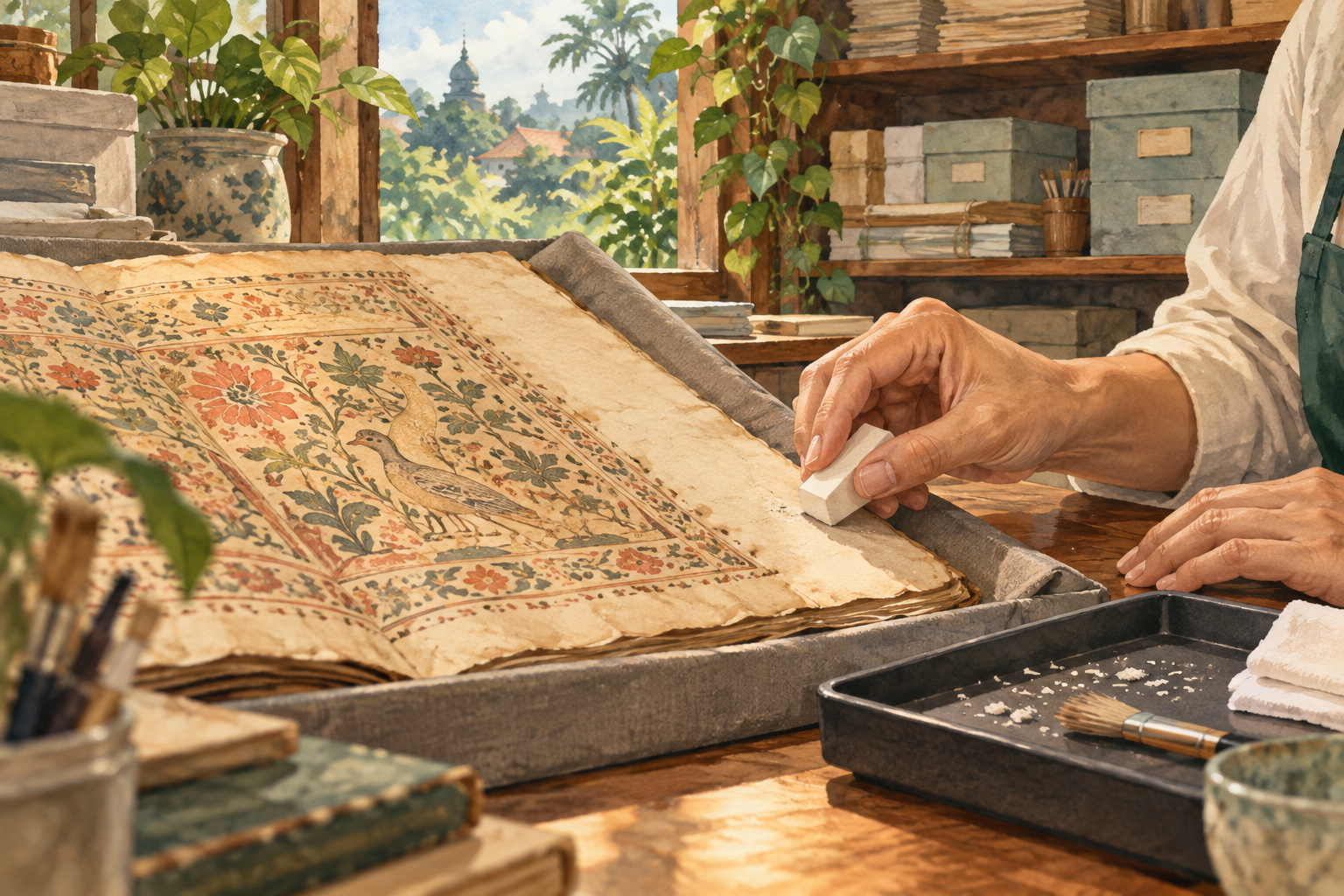
An old manuscript can preserve more than the words written on it. Researchers have found traces of sheeppox DNA in parchment from the York Gospels, and part of the work involved an ordinary-looking eraser.
SAYS highlighted the discovery on 5 October. The unusual find turns a medieval book into evidence about the animals involved in making its pages, as well as the people who wrote and used it.
The finding concerns fragments of genetic material. It does not establish that the book contains an infectious virus or poses a danger to someone reading it.
The page material has its own history
Parchment was made from animal skins. Researchers can therefore investigate biological traces alongside the text, rather than treat each page purely as a writing surface.
In a University College Dublin account of the research, published on 28 September, the team described examining manuscripts from York and the Bodleian collections dated between AD 700 and 1400. A minimally invasive eraser-based sampling method helped collect material for analysis.
That is quite a change in perspective: the marks on a page may tell a human story, while tiny material traces can help explore the livestock and diseases surrounding its production.
The evidence still needs interpretation
The UCD account describes sheeppox traces in three pages associated with the York Gospels, including a later legal document added after the manuscript's creation around AD 990. The age of a book does not mean every addition was made at the same moment.
Researchers also have to consider how the DNA reached a particular piece of parchment. Possible explanations involving animal hosts or contamination need investigation; detecting a sequence alone does not settle every question about the animal's health.
Sheeppox is a livestock disease, and the reporting does not describe it as a known human infection. It should not be confused with human smallpox just because the names sound similar.
The next time a manuscript is displayed as an object of literary history, remember its pages were once physical products of a different world. In this case, a closer look at the material opened another line of inquiry, with no need to tear out a page.
Sources & further reading
Prepared with AI assistance from linked reporting. The cover is an AI-generated editorial illustration. Spotted something we should correct?