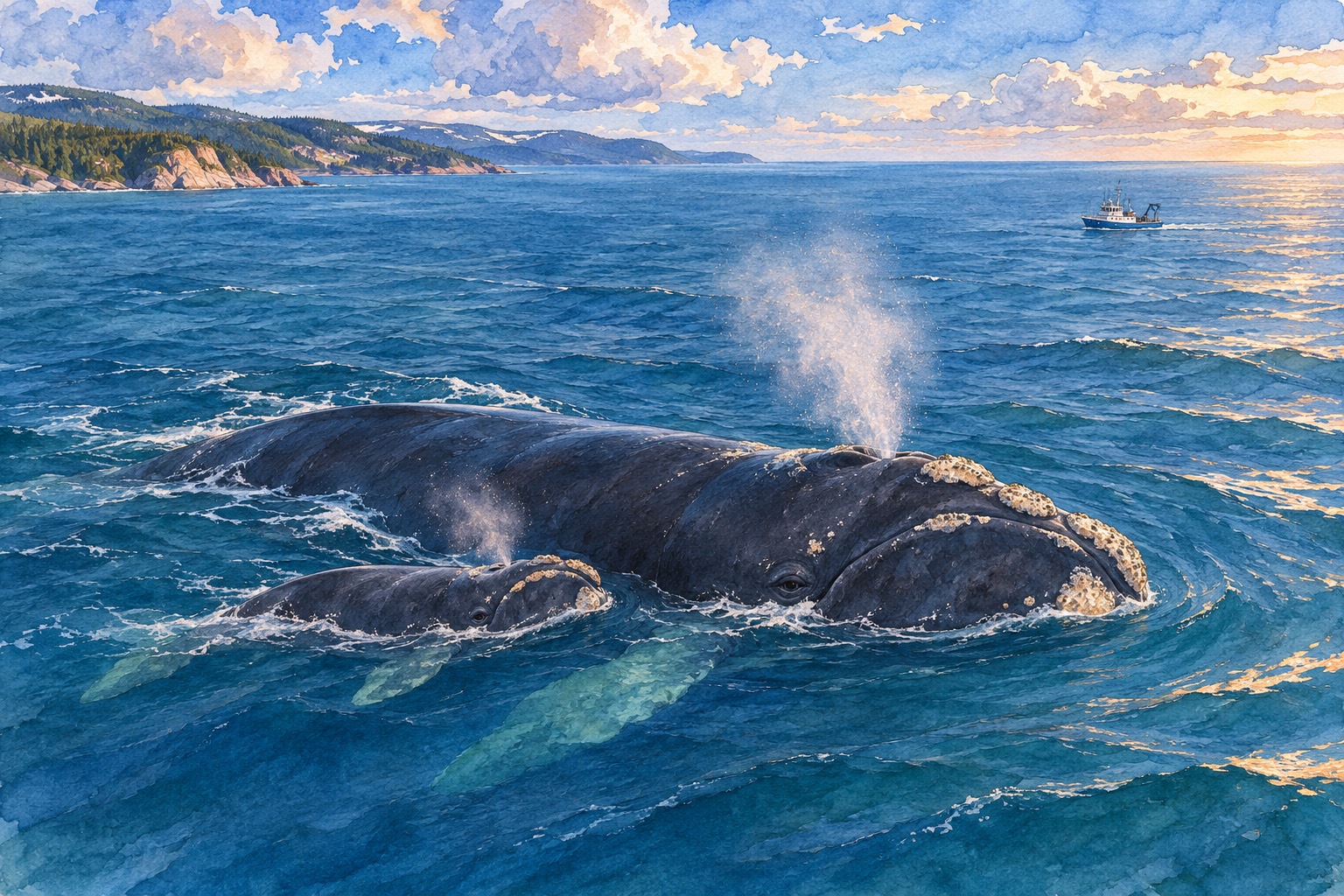
It sounds impossible to misplace a baby weighing about 6,800 kilograms, yet a North Atlantic right-whale calf went undocumented for months before photographs from Canadian waters revealed the surprise.
Researchers photographed the mother-calf pair near Anticosti Island in Quebec in September. Scientists at the New England Aquarium later matched the adult to Silt, a 38-year-old whale whose life history is recorded in a vast photo-identification catalogue.
The new calf raises the season's known total to 24, the best result since 2009 and the fourth-highest count on record. That is encouraging for a species with fewer than 380 individuals and only around 70 females of reproductive age.
The ocean still had room for a secret
Silt was briefly seen in the southeastern United States during the February calving period, but she was not documented with a calf. The pair also escaped boat and aerial surveys along the US East Coast through spring and summer.
Scientists believe the calf was born months before the Canadian sighting. The discovery does not mean survey teams were careless; it shows how a rare, moving animal can disappear across an enormous ocean even when researchers know individual whales by the rough patches of skin on their heads.
Right whales remain vulnerable to collisions with ships and entanglement in fishing gear. Ocean warming can also shift their food and push them beyond areas where protections and surveys are concentrated.
One extra calf cannot secure the species' future, but every birth matters when the breeding population is so small. Silt's late reveal gives scientists a better count — and a reminder that even one of the world's most closely watched whales can still deliver a genuinely happy surprise.
Sources & further reading
Prepared with AI assistance from linked reporting. The cover is an AI-generated editorial illustration. Spotted something we should correct?