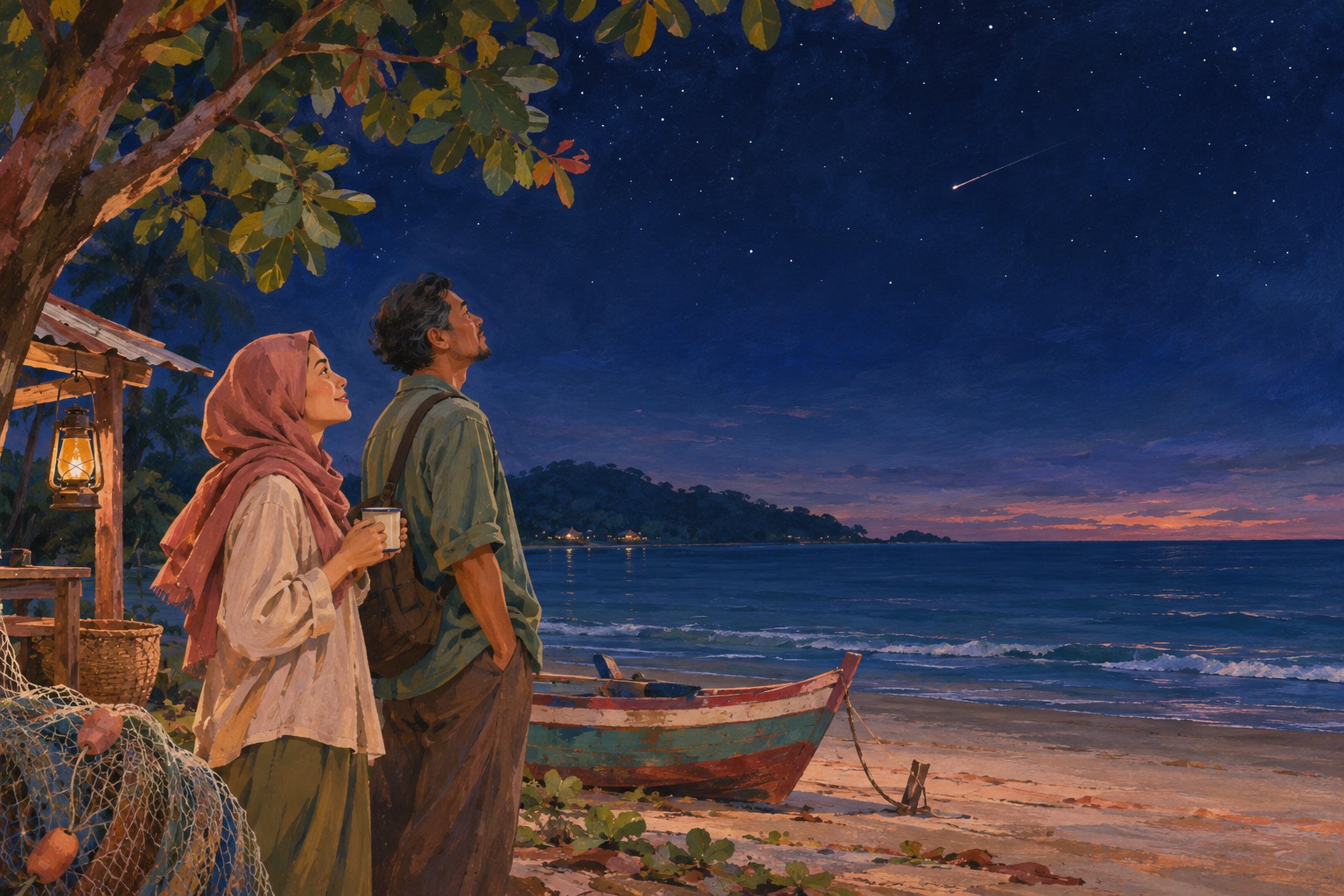
The Leonid meteor shower reaches its predicted regular maximum at 23:45 UTC on 17 November — 7:45 am in Malaysia on Wednesday, 18 November. Daylight blocks the exact peak here, but patient observers still have a useful window before dawn as Earth moves through dust left by comet 55P/Tempel–Tuttle.
The International Meteor Organization lists the Leonids as active from 6 to 30 November, with an ideal zenithal hourly rate of about 15 at maximum. That number assumes a very dark sky, the radiant overhead and excellent visibility. A Malaysian observer under city lights should expect fewer.
How to give yourself a chance
Find an open, safe site with a broad view of the sky and as little artificial light as practical. The radiant lies in Leo and climbs in the eastern sky late at night, becoming better placed before morning twilight. You do not need binoculars or a telescope; both narrow the view. Use your eyes, look across a wide area of sky and allow at least 15 to 20 minutes for dark adaptation.
A reclining chair or mat makes a long watch easier. Keep phone screens dim and red-tinted if you need them, and bring a light layer because a clear pre-dawn site can feel cooler than expected. Check local cloud and rain conditions before travelling, and avoid isolated locations without safe access.
Leonids are fast. The particles enter the atmosphere at around 70 to 71 kilometres per second, producing swift streaks and sometimes persistent trails. They appear to fan out from Leo, but a meteor can flash anywhere, so staring directly at the radiant is unnecessary.
Tempel–Tuttle circles the Sun roughly every 33 years. Its debris has produced famous meteor storms in some past returns, but 2026 is forecast as a normal shower rather than a storm. The practical attraction is quieter: a chance to see a grain-sized particle turn into a bright line above a sleeping landscape.
If clouds win on Wednesday morning, the Leonids remain active for the rest of November at lower rates. The calendar gives the peak; the sky, location and patience decide whether an observer catches one.
Sources & further reading
Prepared with AI assistance from linked reporting. The cover is an AI-generated editorial illustration. Spotted something we should correct?